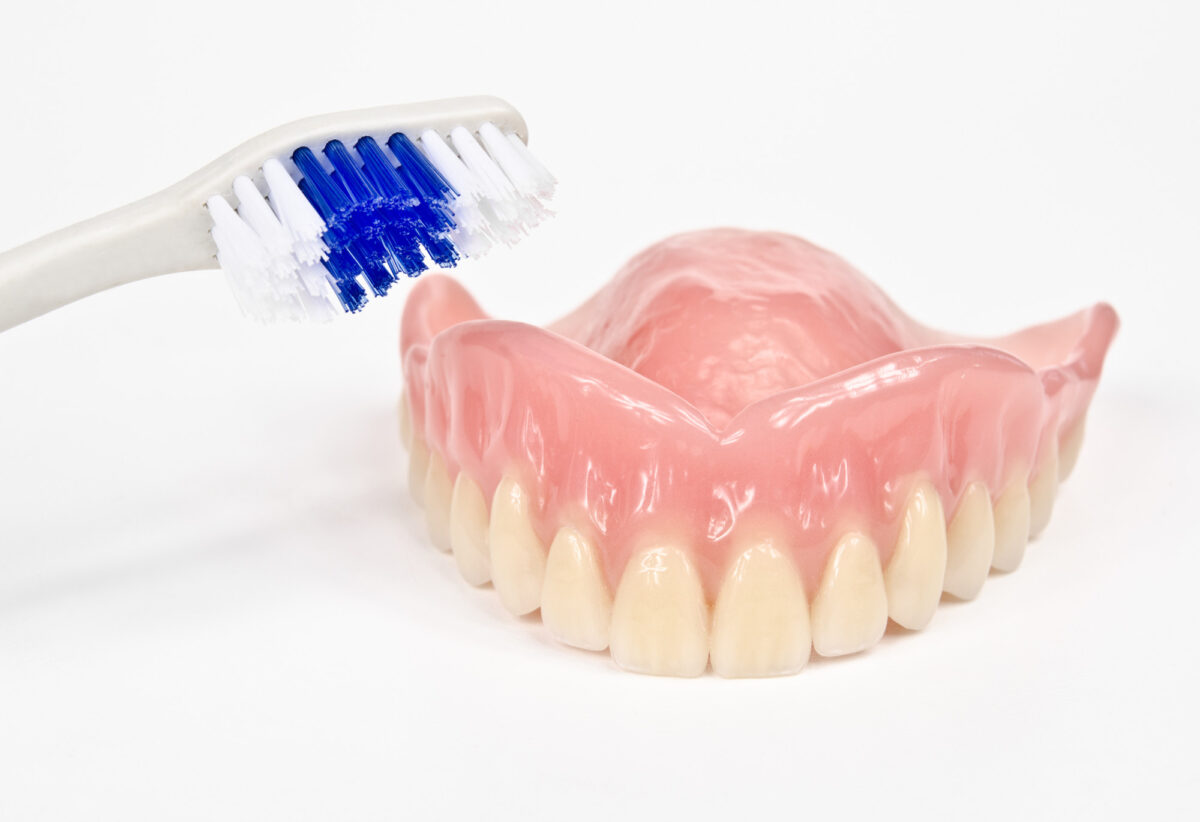
Denture Care Tips for New Wearers

Denture Care Tips for New Wearers

Missing teeth are a significant health problem. Aside from their value for appearance, they may also cause eating or chewing problems, which increases the risk of poor nutrition. Luckily, advances in dental medicine provided a solution to this problem with the development of artificial teeth, or dentures!

However, new wearers know that denture care can be challenging at times. Chewing, speech, bad breath, dry mouth, and even infections may become an issue. Reports say that over half of denture wearers suffer from a fungal infection known as oral stomatitis.

Knowing how to take care of dentures is going to help you keep yours in tip-top shape for as long as entirely possible. Here are some of the most important tips you should follow, especially if this is your first time wearing them.

Brush Your Dentures Regularly

You have to clean your dentures daily. Like regular teeth, they may have stains, tartar, and bacteria. To help keep your prosthetic clean, brush it gently using a dampened soft bristle brush and a good denture cleaner. There are tubes of toothpaste meant for dentures. Others use mild hand soaps or dish washing agents with warm water.

Dentists do not recommend the use of bleaching agents to avoid damages. If you are using denture adhesive, make sure to clean the grooves that fit against your gums to remove any residue.

Follow Good Hygiene Habits

Dentures are a common source of fungal infections in the mouth. Some evidence links oral bacteria with certain respiratory problems. That is why it is very important to clean your dentures and mouth regularly. Always brush your gums, cheeks, and tongue before wearing dentures. This will help remove bacteria that could contribute to gum irritation.

Soak Dentures Daily

After brushing your dentures, experts recommend denture rinse. Soak your prosthetic with a nonabrasive denture cleaner to remove excess food and stains. You can choose between an effervescent, gel, or cream. This process will also help kill germs that cause bad breath. Check the manufacturer’s suggestion on how long you should soak your dentures.

Never use denture rinse products inside your mouth. Be sure to rinse your dental appliances well before wearing them.

Give Your Mouth a Break

Dentists recommend removing your dentures for at least 6 to 8 hours daily to allow the tissues in your mouth to heal from any irritation or soreness. Sleeping without dentures is an excellent way to give your gums and mouth its much-needed rest.

Keep your dentures in warm water. This will help keep their shape and prevent them from drying out. When handling your prosthetic, place a towel underneath them to prevent breakage in case they fall.

Use Adhesives If Necessary

Make sure that your dentures fit properly in your mouth to prevent pain and inflammation. Some wearers are advised to use a dental adhesive. This can help secure your dentures in place while you eat and speak. It will also prevent food particles from lodging between gums and dentures.

Check the label for instructions on how to use it. Some contain zinc, which when used for prolonged periods may cause other health issues. Consult a holistic dentist in Durango, CO to see if a denture adhesive is appropriate for you to use.

Slice Your Food in Small Pieces

It may take some time to get used to eating with dentures. This may affect your overall health if you are not able to eat a well-balanced diet. Experts recommend slicing your food into smaller pieces to allow easy chewing and adding a pat of butter to soften some foods. Also, practice chewing on both sides of your mouth to avoid dislodging your prosthetic while eating.

Stay Hydrated

Evidence suggests that dry mouth may cause gum and mouth irritation, thus increasing one’s risk of bacterial decay. Denture wearers, especially beginners, often complain of dry mouth. It is important to keep yourself hydrated so you can easily replenish body fluids like saliva. Drink at least 8 ounces of fluids daily!

Avoid Hard and Sticky Foods

Sticky foods can easily stick to dentures. This may cause discoloration, discomfort, and tooth decay. Try not to eat chewy types of food like caramel or hard products like nuts. This may cause loosening of your dentures. Choose soft snacks instead, such as smoothies and air-puffed crisps.

Visit Your Dentist Regularly

Go for regular dental visits to check on the quality and fit of your dentures. Your dentist will also examine your mouth for any infection or irritation. Professional cleaning is also recommended at least twice yearly.

What Bridges and Crowns Can Do for Your Smile

What Bridges and Crowns Can Do for Your Smile

Both bridges and crowns can be very helpful in improving not only the physical appearance of your smile, but also the function. Both bridges and crowns can help to prevent your other teeth from shifting around a missing or damaged tooth, causing a bad bite.

They can strengthen damaged teeth and improve a tooth’s shape, alignment, or appearance making them both ideal solutions if you’re looking for a way to improve and protect your smile.

How Can a Dental Bridge Improve Your Smile?

dental bridge can transform your smile by replacing one or multiple missing teeth as long as there are healthy teeth on either side of the gap. They are even strong enough to be used to replace molars. The gap where your tooth is missing is filled with a false tooth and held in place by the teeth on either side of the gap. Typically, dental bridges are made of porcelain to match the teeth around it which is why they’re a great cosmetic solution to missing teeth.

One potential downside of a dental bridge is that the teeth on either side of the missing tooth will need to be sanded down so that a crown can be placed on top of them. This means that if you decide later on to replace your missing tooth with another method, those teeth on either side will always need crowns. 

How Can Crowns Improve Your Smile?

Crowns are versatile and can be used to cover a discolored or misshapen tooth, hold a dental implant in place, protect a weak tooth, or make a modification to your smile, but they are most commonly used to cover or “cap” a damaged tooth. They are a good choice for both front and back teeth and fortunately, come made of a variety of materials like ceramic or porcelain which will look like a natural tooth.

In this procedure, your damaged tooth is sanded down and a crown that looks like your natural tooth is cemented on top of it. Once it is in place, it will be difficult to tell the difference between the crown and your real teeth. Visit the caring holistic dentists in Durango, CO to discuss your denture needs in-depth.

How to Prepare for Your Kid’s First Dental Appointment

How to Prepare for Your Kid’s First Dental Appointment

Did you know you should start taking your child to the dentist by the time they turn one? As soon as they have teeth, those teeth need to be well cared for. 

Your kid’s first dentist appointment will most likely be short with little to no treatment and provides your child the opportunity to become comfortable with the dentist. This gives the dentist and the parents a chance to see how the child will respond to this new environment. 

Practice Brushing

Have your child practice tooth brushing and get them used to having objects like a brush or cleaning tool in their mouth. 

Take Them To Your Appointment

It may be helpful for your child to have a familiarity with the dentist, so take them to your dentist appointment if you can. Show them how fun a trip to the dentist can be!

Talk To Them

Before their visit, use positive language to talk to your child about what to expect and remind them that their first visit won’t involve any procedures. 

Bring Comforting Toys

Feel free to bring along toys and other distractions to comfort your child in the waiting room and the dentist’s chair.

Stay Calm

Yes, we’re talking to you Mom or Dad! You may not realize how noticeable your own stress and anxiety is to your child. Stay relaxed and remember that an experienced family dentist will know how to handle any behavior that your child throws their way.

Plan a Reward

It’s a good idea to plan a trip to a park or another fun experience for your kid after their first visit to the dentist. Let them know that they have something to look forward to after their appointment. 

Remember that your child has not had a bad experience with the holistic dentist in Durango, CO yet, so it could be a very exciting, not frightening, experience for them!

How to Fix Tooth Enamel Erosion?

How to Fix Tooth Enamel Erosion?

Enamel is the strongest tissue in the human body – even stronger than bone. As the translucent outer layer of your teeth, enamel protects from harsh chemicals and temperatures. 

Your enamel also protects your teeth during daily activities when you’re biting, chewing, and crunching foods; if you grind your teeth at night, your enamel protects your teeth and gums from that impact as well. 

However, tooth enamel is not indestructible. 

What is Tooth Enamel Erosion?

Enamel erosion occurs when acids slowly wear away the enamel on your teeth. This is a problem since enamel does not have living cells to allow your body to regenerate it. So, once your enamel is eroded, cracked, or damaged in any way, the only way to restore the protection it offered to your teeth is with some kind of dental procedure.

That’s why it’s best to be aware of the causes of tooth enamel erosion to avoid losing that natural protection if at all possible.

Common Causes of Tooth Enamel Erosion

In order to avoid tooth enamel erosion and any other kind of tooth enamel damage, it’s important to understand the various substances and situations that can cause these problems to occur. 

Sometimes, tooth enamel erosion happens because of a genetic disposition to weak enamel or acidic types of plaque build-up. However, enamel damage can also be prevented by avoiding certain foods, drinks, and habits.

Acid Erosion

Various substances can create erosion because of their acidic quality. In these cases, avoiding too much exposure to the substance is the best way to prevent tooth enamel erosion.

Some of the substances that lead to tooth enamel erosion include:

  • Fruity drinks, which are highly acidic and high in sugar
  • Sugary and starchy foods like syrups and white bread
  • Soft drinks, which are high in citric and phosphoric acids and in sugar
  • Excessive amounts of vitamin C
  • Medications like antihistamines and aspirin

Environmental Erosion

Sometimes, tooth enamel erosion occurs because of a situation in your environment, or a harmful habit. These can include: 

  • Dry mouth, or low saliva production
  • Gastrointestinal issues or acid reflux
  • Clenching or grinding teeth
  • Brushing too hard or improper flossing
  • Biting hard objects
  • Frequent vomiting
  • Plaque buildup from improper dental hygiene

How to Fix Tooth Enamel Erosion

As previously mentioned, tooth enamel cannot repair itself. So, if your enamel has already begun to erode, you cannot reverse that process. But you can prevent it from getting any worse. 

Prevention

The best way to fix enamel erosion is to prevent it from happening in the first place by taking good care of your teeth with proper brushing and flossing and by visiting the dentist regularly for dental cleanings. 

You can also try to avoid acidic foods and substances that could erode your teeth and address any habits you might have that could cause your tooth enamel to erode.

Enamel erosion occurs over time, so if you do visit a holistic dentist in Durango, CO regularly, they should be able to diagnose and treat erosion early, once they first notice the signs.

Dental Treatments

If you’re experiencing the earlier signs of enamel erosion, your dentist might suggest dental bonding. This is a relatively conservative restorative procedure in which your dentist will place a tooth-colored resin on your teeth that will then bond with your teeth and serve the protective purpose that your enamel served before it began to erode.

However, dental bonding can stain and is not as strong as other, usually more expensive procedures. 

If your enamel is too eroded or if your teeth have cracked or broken as a result of enamel erosion, you might need a more drastic treatment to fix it. Several different types of cosmetic dental procedures address issues that occur from damaged enamel, like dental crowns, bridges, or veneers.

These options utilize a substance like porcelain, which is designed to match the color of your teeth, to cover the damaged tooth or teeth and serve as a replacement for the enamel that has been damaged.

To find out which treatment is right for you, visit your dentist. They should be able to work out a treatment that will be cost-effective for you while also providing a long-term solution for enamel erosion and any other issues you might be experiencing.

Are My Wisdom Teeth Causing Bad Breath?

Are My Wisdom Teeth Causing Bad Breath?

If you’re a young adult who suffers from halitosis, you may be wondering, “Are my wisdom teeth causing bad breath?” The answer, as with many dental questions, is “it’s possible.”  There are a few ways in which wisdom teeth can cause bad breath:

  • As they erupt, upper wisdom teeth can irritate your sinuses, causing blockages, sinus infections, and bad breath due to sinus drainage in your throat.
  • If the erupting or impacted wisdom teeth have irritated your sinuses, they may be affecting your sleep breathing.  This can lead to breathing through your mouth instead of your nose while you sleep.   This dries out your mouth and can cause extra bacterial activity that leads to bad breath.
  • If your wisdom teeth are impacted and cannot come in cleanly, they can trap food and bacteria, irritate your gums, and injure other teeth.  All of these things can contribute to the type of bacterial infection that can cause bad breath.
  • If you’ve recently had your wisdom teeth removed, the healing process can sometimes cause bad breath. However, this sort of smell and taste should be resolved by rinsing with saltwater.  A saltwater rinse doesn’t resolve the bad breath from your wisdom teeth, you may have an infection.

You may have noticed that a common thread in all of these causes is that bacterial infection is causing bad breath.   How to resolve the bad breath from your wisdom teeth depends on where the infection is and how long you’ve had it.

Your Dentist Can Help

If you suspect your bad breath is related to your wisdom teeth, the first step is to talk to the expert holistic dentists in Durango, CO. A set of x-rays can determine if your wisdom teeth are erupting if they’re impacted, and how they’re involved with your sinuses.

If the problem is mainly sinus-related, your dentist will probably have you call your PCP.  Antibiotics and oral steroids are often used to treat sinus infections, and your doctor may also recommend a nasal steroid or saline nose wash to help keep your sinuses clear as your wisdom teeth erupt.

If mouth-breathing is contributing to your bad breath from wisdom teeth, you may need to use a mouth rinse to reduce the impact of dry mouth on bacterial growth.  The same bacteria that cause bad breath can also cause tooth decay, and when you have insufficient saliva, the acid these bacteria produce eats away at your teeth.  

If your wisdom teeth are impacted, most dentists will recommend surgery to remove them. Impacted teeth are coming in at an angle that will damage your jawbone or other teeth.  They will not come in cleanly.  Bad breath is one sign that the impacted teeth are causing problems. It’s good to have the teeth removed before the situation becomes an emergency.  Well-planned wisdom tooth surgery results in fewer complications.  

One exception to this rule is if you experience bad breath after surgery that doesn’t resolve when you clean your wound with a saline rinse.  Bad breath is a sign that unhealthy bacteria is growing in your mouth.  After oral surgery, it can be a sign of infection, especially if it is combined with pain and swelling at the surgical site.  

If the gums where your wisdom teeth were have become infected, you may need to take antibiotics to resolve the infection.  In rare cases, you may need a follow-up appointment with the oral surgeon to examine the wound or to do an additional procedure.

Other Causes of Bad Breath

While wisdom teeth can cause bad breath, they’re not the most common cause. Even if you’re in your late teens or early 20s, more common causes of bad breath include allergies, sinus colds, bad sleep breathing, dietary choices, and the normal, every-day bacteria that colonize your mouth.  If you’re concerned about bad breath, make sure to mention it to your dentist.  There are tests and screening tools available to help you discover the underlying cause and get treatment so that you can be confident in your smile.

What Causes Receding Gums and What Can You Do About Them?

What Causes Receding Gums and What Can You Do About Them?

Receding gums is very common and can happen for many reasons. While gum tissue cannot grow back, there are prevention techniques and treatments available. So, if this is a problem for you, don’t panic, you are not alone.

Oral hygiene can be a factor in receding gums. It is important to floss, use mouthwash, and make sure you aren’t brushing too hard. Along with not brushing too hard, a soft bristled toothbrush may be helpful if you are struggling with your gums. Taking proper care of your teeth at home is a priority, and make sure you go for regular dental checkups.

Periodontal disease (an infection of the gums) and gingivitis (gum inflammation), can cause receding gums and lead to issues with the jaw.

Hormone changes in women can affect gums as well. Estrogen fluctuations during pregnancy, menopause, and even menstruation can increase blood flow and cause them to recede.

Genetics is another factor that can cause gum recession. If members in your family have had this issue, there may be a link. Diabetes can affect this too, so proper diabetes maintenance is also important.

And finally smoking can affect gums, so if quitting has been on your to-do list, now might be time to tackle it! Another habit to break is clenching your jaw if that is an issue.

What are the Symptoms of Receding Gums?

One of the most obvious signs of gum issues is bleeding when you brush or floss. When your gums are super sensitive and showing signs of inflammation, it’s time to look closer at the issue. Along with bleeding and inflammation, sensitivity to hot or cold food can also occur. When the roots get exposed, they can be quite painful and irritable. Loose teeth are another thing to look for and having bad breath. If you are struggling to have fresh breath, it may be worth looking at your gum health.

What Treatments are Available?

When preventing gum recession, there are a few different places to start. A healthy diet helps build strong teeth and keeps the body healthy. With food choices, minimizing acidic food and drink will help prevent further damage.

If you are a smoker and have receding gums, this is also a habit you want to break. Having a consistent oral health routine, including bushing, flossing, and mouthwash, will help keep your gums healthy. Switching to a softer toothbrush and toothpaste for sensitive teeth can also be helpful. If grinding your teeth is an issue, your dentist may suggest a mouth guard to help.

With surgery options, there are two types of surgeries suggested. For minor issues they begin with a very thorough cleaning. Getting in between the teeth and cleaning under the gums. They can reattach the gums if needed, which is a simple procedure.

For receding gums that need more intense treatment, they do gum grafting. Basically, this means they take the gum tissue off the top of the mouth and attach it to the area needed. While this is a more intense surgery, it is still simple and quite common.

Where Should You Start?

Multiple issues can cause receding gums. There are many options to try, and this is an obstacle many people face. If this is a problem for you, or you have questions, contact the expert holistic dentist in Durango, CO to discuss the best action to take. Above all, keep flossing, brushing, and rinsing, and visit your dentist as recommended.

What are the Different Types of Braces and How Do I Choose?

What are the Different Types of Braces and How Do I Choose?

Choosing braces can seem intimidating. Fortunately, there are a few options for you to choose from and you are going to have a fabulous smile at the end of it all. Here’s what you need to know about the different types of braces and how to select the perfect one for you.

What to Look for When Getting Braces

When getting braces, you should consider a few factors. How misaligned your teeth are can affect your options. Cost is also a factor, and how long you will need to wear them. When you wear braces, there are certain food restrictions that can pop up, which is why you need to consider dietary restraints as well. There will also be a period of getting used to how they feel.

Comfort is something you may wish to consider, given the length of treatment. Finally, your own preferences. What do you prefer? Are you ok with food restrictions? Is there a look you are happier with? Are you disciplined with hygiene? Braces are a commitment, so don’t be afraid to take your time and ask lots of questions.

What are the Different Types of Braces?

When choosing braces, your choices are metal, ceramic, and invisible. They each have their pros and cons, so keep that in mind when deciding.

Metal braces are the most affordable. Usually worn for 18-36 months, they are highly effective for most patients. They are uncomfortable to begin with, but become more manageable. In order to protect the brackets, there are some food restrictions, and oral hygiene is important. They are durable, but also more visible if this is a concern for you.

Ceramic braces are more expensive than metal ones, but slightly less noticeable. They are also worn for 18-36 months, and while metal braces are the most effective, ceramic is also very efficient. There are dietary restrictions with ceramic braces as well, and initial discomfort. Overall, they are a great option if your alignment needs stronger braces, but you want something that blends in a little more.

Invisible braces are ideal for mild-to-moderate misalignments. Typically worn for 12-24 months, they are the most comfortable and also the most expensive. They can be removed for eating, which is convenient, but they also require a lot of discipline because the trays need to be replaced often.

What Foods to Avoid with Braces

For both metal and ceramic braces, these are the foods you will want to avoid eating. And of course, your dentist will also offer information on the do’s and don’ts of braces.

  • Popcorn
  • Chips
  • Chewing gum
  • Hard candy
  • Ice
  • Hard fruits and vegetables
  • Hard crackers
  • Pizza crust

Also, cutting down on sugary drinks and food while you have braces, will help lower your risk of cavities since it can be harder to keep your teeth plaque-free.

Taking Care of your Braces

Making sure your braces are in tip-top condition during treatment involves good oral hygiene. Try to brush after every meal, and floss to remove food caught around the brackets and between your teeth. And remember, regular trips to the holistic dentists in Durango, CO for cleanings will help keep your teeth in optimal shape while they are adjusting.

Why Choose Braces?

Braces do an incredible job at not only aligning your teeth so they look beautiful but also function better. In the long run, having teeth that can be properly cleaned, and taken care of will save you a lot of stress and maintenance. Embrace your braces, take care of them, and look forward to your brand new smile.

What Are the Four Benefits of Flossing?

What Are the Four Benefits of Flossing?

How often do you floss? Is it necessary? How does it benefit your mouth? Flossing is one of those things we are told to do, and we know we probably should, but often we put it in an optional category. The truth is flossing has enormous benefits and should be done every day. It can do things toothbrushes can’t and is a very important part of oral health.

Why Brushing Your Teeth Is Not Enough

Brushing your teeth is obviously very important. It is the first line of defense against cavities and a daily habit that helps keep our mouths clean and healthy. However, a toothbrush cannot remove all the food and bacteria that can get trapped between your teeth.

Flossing can get into areas that a toothbrush cannot and remove bacteria before it turns into plaque. Thankfully, when you prevent plaque buildup, you are stopping the cycle of plaque turning into tartar. Tartar is a hard and crusty substance that gets stuck on the teeth. Tartar needs removing by a dentist or hygienist, so preventing this from happening has fantastic benefits.

Flossing for Fresh Breath

We all want fresh breath and know that uncomfortable feeling when it’s not at its best. What we might not know though is how flossing helps keep our breath fresher. When bacteria is trapped between our teeth, there is a risk of it smelling. Removing the bacteria means removing potential odor. The simple act of flossing daily can help keep your breath fresher and your mouth healthier. It’s a tiny act, with huge rewards.

Flossing Fights Gum Disease

We talked about plaque prevention, but what does plaque actually do? At a surface level plaque can stain the teeth which isn’t very pleasant. On a deeper level it can build up and cause permanent damage. When plaque and tartar are not removed, the bacteria can cause gum disease. Gingivitis is a mild form of gum disease which causes the gums to become inflamed. The gums will appear red and swollen and can bleed easily. This can be reversed with good oral hygiene.

Proper brushing, flossing, rinsing, and regular dental checkups will make the gums healthy and happy again. If gingivitis is not dealt with, it can turn into periodontitis, which requires dental intervention. Periodontitis is when the gums around the tooth get inflamed and pull away. This causes pockets, and these pockets then become infected. The bacteria spreading beneath the gum line can cause bone loss, and eventually the tooth can become loose and need removing. While flossing might seem unnecessary, it can help save your teeth.

Flossing Helps Keep You Healthy

We know it helps keep your mouth healthy, but it does even more. Flossing helps prevent heart disease. The link between oral health and heart health still needs more research, but there is a lot of information worth reading to learn about the connection. This is definitely something to consider if you are struggling with motivation to floss.

Adding Flossing to Your Routine

If you are ready to floss, you may have questions about the proper way to do this. You will want to hold the floss tightly between your thumb and index finger and place it between your teeth in a C shape. You will then ease the floss up and down away from the gum line, and move on to the next tooth. For each new tooth, make sure you use a clean section of floss, and throw it out when you are finished. You are now ready to floss each day, enjoy healthier teeth and gums, and fresher breath!

Visit the holistic dentist in Durango, CO who can give you tips and advice regarding the different types of dental floss and the proper techniques of flossing.

Five Signs of Gum Disease and How to Address Them

Five Signs of Gum Disease and How to Address Them

Do you know the signs of gum disease? Perhaps you aren’t even aware you have it. According to the U.S. Centers for Disease Control and Prevention (CDC), roughly 50% of all American adults over age 30 have some type of gum disease.

Learning the symptoms to look out for will help you know how to address gum disease. And, it’s always important to take care of the actual causes, not just the symptoms. Gum disease doesn’t require a simple Band-Aid; it’s a major cause of other oral health problems too.

A few key reasons for gum disease include:

  • Lack of disciplined dental care at home.
  • Infrequent visits (or no visits at all) to a dentist.
  • Poor diet, among others.

This blog will help you identify a handful of gum disease symptoms and teach you how to address gum disease.

Early Warning Signs: How to Detect and Treat Gum Disease

The CDC’s alarming study illustrates how serious gum disease is. Pay attention to these common signs of gum disease:

  • Bleeding gums: Probably the most common symptom of gum disease, bleeding gums occur because the tissue surrounding the teeth is inflamed. Too much bacteria in the mouth contributes to bleeding gums, which is often the result of not brushing and flossing regularly.
  • Bad breath: Toxins in bacteria can get into the gums and create a foul odor – bad news for you and the people around you!
  • Sensitivity to hot and cold foods: When your gums aren’t at 100%, small signs can indicate problems. One of the most common signs of disease is extreme sensitivity to hot and cold foods and drinks. Gum disease causes the gums to shrink, meaning food and drinks touch teeth deeper toward the roots.
  • Changes in bite: This is a more severe sign of gum disease. If you let the problem go too long, your actual bite may misalign. If your bite doesn’t feel normal, schedule a dental appointment today.
  • High blood sugar: The link between Type 2 diabetes and gum disease is strong. Always let your dentist know if you have diabetes. At the same time, if you experience any of these symptoms or suspect you may have gum disease, it’s a good idea to get a simple blood sugar test to rule out diabetes.

If you show any of these signs and don’t know how to address gum disease, the first step is to ensure you’re brushing and flossing regularly. You can also schedule a visit to the professional holistic dentists in Durango, CO for a complete checkup. 

Instructions on How to Properly Clean Your Dentures

Instructions on How to Properly Clean Your Dentures

Dentures only last about 5 to 8 years before needing replacement due to the everyday wear and tear that teeth endure.

Without health insurance, the average price of dentures can be anywhere from $1300 to upwards of $3000. They’re not cheap!

With proper care, your dentures stand a good chance of living a longer life, and you’ll be able to save thousands.

In this article, we’ll explore the best way to clean your dentures, from removing plaque to brushing frequency.

Cleaning After Food

After every meal or snack, you should carefully remove your dentures to give them a quick clean. It’s important to make sure that any loose particles are removed. This will not only help your dentures last longer, but it will keep your gums healthy and comfortable.

Be sure to clean your mouth and gums while your dentures are out. Using a soft brush so as not to cause harm makes for happy gums and fresh breath.

If you’re in a rush, it’s ok to simply rinse and run, but be sure to give them a full brush as soon as possible.

Brushing and Flossing Daily

If you did have to rinse and run throughout the day, make sure you properly brush and floss your dentures, and use a soft brush on your gums, at least once a day.

There are many different denture care products available, but simply choose a nonabrasive denture cleanser and a soft-bristle brush that fit your budget.

Soak your dentures in the cleanser using the instructions on the package and then take your toothbrush to them to remove any remaining debris.

How to Remove Plaque From Dentures

The plaque shouldn’t be a major issue when proper daily brushing and denture cleaning is done. However, if some of the pesky substance does appear, a soft brush taken to the areas should fix the problem.

If the soft brush doesn’t work for any reason, or it causes too much wrist strain, consider investing in an ultrasonic denture cleaner that vibrates away plaque and other debris.

How to Remove Tartar from Dentures

Plaque that builds up and hardens is known as tartar. It’s more difficult to remove from dentures than plaque and a typical toothbrush will not do the job. If you do find a build-up of tartar, it’s best to have it removed by a dental professional who follows the technique of holistic dentistry in Durango, CO.

Soak Your Dentures Overnight

Dentures need to stay moist in order to maintain their shape and keep a comfy fit in your mouth. Soak your dentures overnight in a glass of water or a mild denture cleanser solution. It’s best to check with your dentist for their recommendation as dentures differ in material and may last longer with certain substances.

Design a site like this with WordPress.com
Get started