Dental Implants: Myths vs. Facts

Although dental implants have been around for decades, they’ve been increasing in popularity in recent years. As interest grows in implants, so too have some misconceptions about the procedure. Here are some common myths we hear at our practice.
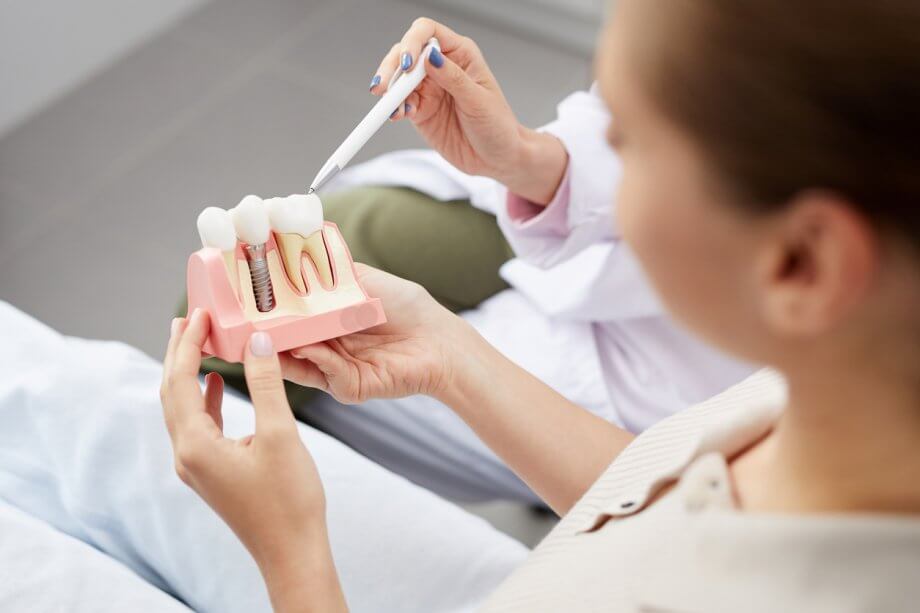
dental and patient examination
Dental Implants: Myths vs. Facts

Myth: Dental implants aren’t for young people.

Fact: Dental implants are for any adult missing teeth. 

You may think that dental implants are not for people in their 20s or 30s. The truth is, if you’re an adult, you’re healthy, and you have enough bone density in your jaw, you’re a candidate for dental implants. In fact, dental implants are especially suited to your needs because with proper care, you’ll never have to replace them––they’re a lifetime solution for missing teeth. There’s no reason to feel self-conscious or embarrassed about needing dental implants, no matter what your age. 

Myth: Getting dental implants is painful.

Fact: Getting dental implants may be uncomfortable.

Many patients are nervous about getting dental implants; it’s a surgical procedure, so it’s only natural to feel anxious. One thing we can assure you is that we will do everything we can to keep you calm and comfortable throughout your procedure. We give all of our patients anesthesia to numb the area where we’re working; we also offer sedation options if anxiety is a factor. 

Patients rarely, if ever, experience pain during dental implant surgery. There may be some discomfort and feelings of pressure or pulling, but not pain. In the days after your surgery, you may experience soreness and swelling, but cold compresses and over-the-counter anti-inflammatory pain medication will do wonders to keep it in check.

Myth: Dental implants don’t look natural.

Fact: Dental implants are the most natural option to replace missing teeth.

This myth may have come about as a result of people getting cheap dental implants from inexperienced providers. That’s something you’ll never have to worry about with Rosewood Dental. We only use high quality materials to make sure your smile is beautiful and appears natural.

Dental implants are the only replacement for missing teeth that functions exactly like natural teeth, with both a root and a crown. They restore both function and appearance, allowing you to eat all your favorite foods and speak without worrying about your dentures slipping. Because they’re replacing the root of your tooth, they’re firmly anchored in place and they result in a strong bite and reduced risk of facial collapse.

Myth: Dental implants are dangerous.

Fact: Dental implants have a 98 percent success rate.

It’s easy to find horror stories about dental implants online, but those stories get traction because they’re outliers––situations like that rarely happen, especially when implants are placed by a qualified dentist.

Only 2 percent of dental implants fail, and when this occurs, it’s often because the patient shouldn’t have been given dental implants in the first place. We take imaging of your jaw to ensure you have the required bone density to support implants and carefully go over your medical history to ensure there are no contraindications.

Of course, dental implants are a surgical procedure, so they carry the same risks as any other type of surgery: nerve damage, injury to the surrounding structures, and infection.

Myth: Dental implants are overpriced.

Fact: Dental implants are expensive because they are a permanent replacement for missing teeth.

Dental implants seem expensive on the surface, but with dental implants, you’re paying for several visits, one or more surgeries, and expertly crafted porcelain teeth, titanium posts, and abutments. These costs add up, particularly when insurance doesn’t cover them. We understand the sticker shock, but dental implants are a permanent replacement for missing teeth; with proper care, you’ll never have to spend another dime on them ever again.

Get More Facts About Dental Implants

Do you want to learn more about dental implants? Contact your Dentists Durango, CO to make an appointment with expert Dentists.

3 Reasons You Might Need a Dental Crown

A beautiful, healthy smile is important to pretty much everyone. In fact, 99.7% of all adults surveyed by the American Academy of Cosmetic Dentistry reported that having a healthy smile is socially important. But tooth pain and damage can certainly keep your smile from looking its very best.

crown fillings
3 Reasons You Might Need a Dental Crown

Fortunately, your local dentist can help restore the health and appearance of your teeth, restoring that special glow that comes from a genuine smile. To do that, your dentist may suggest that crown fillings are needed in certain situations. But why exactly might crowns be needed? We’ll take a look at three of the most common reasons dental crowns are installed below.

  1. You’re getting a root canal
    If the nerve of a tooth becomes infected, the tooth will require a root canal. Your tooth will be hollowed out during the process. This makes the tooth more vulnerable to cracking. In the majority of cases, your dentist will need to restore those teeth with crown fillings to keep it from fracturing. Crowns and caps provide more protection and strength, so they’re typically recommended to prevent further damage.
  2. You’ve had a large cavity
    If you’ve had a particularly large cavity that requires a more substantial filling, it will usually need to be covered with a crown. This is due to the fact that the remaining part of the tooth — in these cases, half of its original width or less — will be very weak and prone to additional damage. In addition, older or larger fillings may need to be replaced with crowns at some point, especially if those teeth show signs of stress.
  3. You have a deep crack or painful fractures
    Patients with cracked teeth don’t always require crown fillings. However, if the crack is particularly deep or particularly painful, crown fillings are often recommended to protect the root from irreparable damage. There’s also a condition, referred to as cracked tooth syndrome, caused by stress fracture lines. It has many causes (we’re looking at you, tooth grinders), but it will be very painful when the patient chews a certain way. This can put additional stress on those fracture lines, which can cause even more damage. Crowns will not only help distribute this stress more evenly, but also help eliminate pain and provide protection.

If you’re experiencing dental pain or just want to improve the overall look of your smile, the expert Holistic Dentist in Durango, CO is here to help. For more information or to schedule an appointment, please contact us today.

Crowns, Veneers, and Better Teeth Today

Did you know that a quarter of adults don’t brush twice a day, including one out of three men? This might not surprise some of you, but it goes some way toward providing an explanation for the high demand of crowns, caps, and veneers in dentistry.

Crowns, Veneers, and Better Teeth Today

In the absence of proper oral hygiene habits, many problems can occur. Sometimes the problems are simply cosmetic, but in many cases, improper brushing can result in oral health conditions.

Veneers Vs. Crowns: What’s the difference?

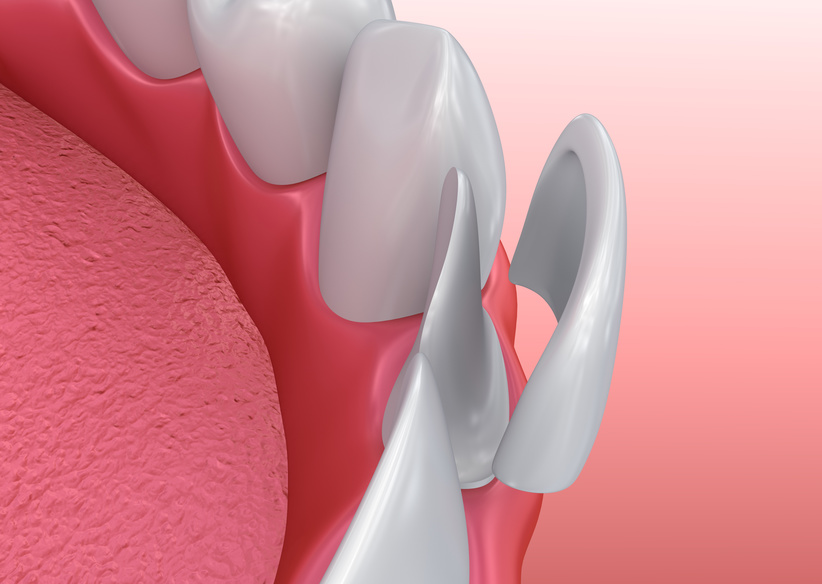
A veneer is a porcelain cover for the front of a tooth. They are typically used as a cosmetic cover for discolored teeth, giving off a shiny white appearance. Only about one millimeter thick, a veneer requires little crown reduction (only between 3% and 30%), making the process quicker and less invasive.

A crown is a cap that almost always covers the entire tooth. Crowns are used to protect a broken or decayed tooth, allowing you to eat normally while the tooth recovers underneath. Unfortunately, due to the important function they perform, full crowns are generally two or more times the thickness of a veneer. Likewise, the natural crown of your tooth might need to be reduced by up to 76% in size.

How They Help

Dentists will recommend one of these two solutions in certain circumstances. If you’ve ever been in to get a cavity filled, it’s likely your dentist was installing a crown. If you were to continue eating, drinking, and generally using your teeth while afflicted with a cavity, you would see further tooth decay, potential infection, and eventual agonizing tooth pain. A crown can put a temporary stop to these dangers.

A veneer is a lightweight solution to somewhat similar issues. If you’re facing discoloration from inconsistent oral hygiene but haven’t suffered a cavity yet, a veneer can both brighten up your smile and protect your tooth from further harm. The main drawback is that this option tends to work best on the front teeth.

Your Holistic Dentist in Durango, CO will walk you through your options for everything from discoloration to cavities, ensuring along the way that you remain informed and prepared for any dental issues you may face.

The 2 Main Types of Dental Implant Surgery

Losing a permanent tooth can feel fairly bad due to the social stigma associated with imperfect teeth. In fact, according to recent American Academy of Cosmetic Dentistry survey data, 99.7% of adult respondents believe a healthy smile is socially important. This largely unspoken societal agreement that a good smile is important can certainly affect those with missing teeth in negative ways.

Luckily, the humble dental implant is here to permanently solve this problem. But what types of dental implant surgery are available?

dental implant
The 2 Main Types of Dental Implant Surgery
  1. Single-Stage Dental Implants
    In this type of surgery, a long implant base is placed into the gum reaching all the way to the jaw bone, but not into it. The top of the implant is flush with the gum line. The gums are then stitched shut, leaving only the head of the implant exposed. This allows dentists to go back after the gums heal and attach the prosthetic tooth itself.

    Subperiosteal implants are the most common single-stage implants. They are mostly used as the base for dentures, and they sit on the bone. This type of implant is typically more expensive because it needs to be custom fitted due to lack of viable jaw bone space.
  2. Two-Stage Implants
    These are largely the same as single stage implants, except they are drilled into the jaw bone. Also, the gums are stitched all the way shut, meaning there is a need for minor surgery to attach the abutment.

    Endosteal implants are the main two-stage alternative to removable implants. They can be screwed in or inserted using a cone or blade that mimic the tooth’s natural root structure. They provide a more secure and permanent structure. They are also less expensive, but might not work for everyone’s mouth.

In general, dental implants open up many opportunities for continuing dental care in the area affected from tooth loss. From crowns and caps to completely prosthetic teeth, you will be able to maintain better oral hygiene and smile your brightest.

If you have lost a permanent tooth and you are feeling self-conscious about it, don’t worry. Talk to your Best Dentist in Durango, CO about dental implants and if they are a viable solution to your cosmetic dental problem.

6 Simple Solutions to Common Dental Problems

Teeth prove ever troublesome to tend to over the course of life. There are many things that can go wrong with your teeth at any age. Luckily, we have come a long way in developing solutions that can permanently fix these problems. Here are six examples.

porcelain veneers
6 Simple Solutions to Common Dental Problems
  1. Whitening
    Nearly half (48%) of Americans are unhappy with their teeth, and 64% of them cite discoloration as the reason. Over time, plaque accumulation and aging will wear on the natural color of your teeth. One solution to this issue is to have them professionally whitened at your dentist’s recommendation.
  2. Porcelain Veneers
    If your teeth have suffered enamel erosion past a certain point, porcelain veneers can cover them and block out discoloration entirely. Likewise, if you chip your front teeth, porcelain veneers can cover that. Veneers are more useful for minor damage to the front teeth and are used primarily in cosmetic dentistry.
  3. Braces
    Alignment issues are fairly common. Braces and invisible aligners are excellent tools to fix this issue entirely. Having an improper bite can cause jaw discomfort and further issues later in life. It is much better to get braces now than to wait until later.
  4. Crowns and Caps
    Severe cavities will require something to block food and drink from entering. Fillings, followed by a cap or crown to cover the tooth, will solve the problem and keep your teeth safe for years to come.
  5. Extractions
    Sometimes your teeth need to be pulled. This is most common with wisdom teeth, as many people will not have room for their wisdom teeth to properly grow into their mouths.
  6. Dental Implants
    As you age, you might experience tooth decay. You might also get into an accident or altercation that results in your teeth being knocked out. Whatever the cause, dental implants are a ready solution.

Most conceivable dental issues have ready solutions that have been well established for many years. Taking care of your teeth is a daily responsibility, but just know that there are solutions to almost any situation that you run into. If you require any of these treatments, contact Holistic Dentistry Durango, CO today to schedule an appointment.

Crowning Achievement: Know The 4 Different Types Of Dental Crowns

Dental crowns and caps are used to cover or strengthen damaged teeth, which improves their overall appearance and alignment in the mouth. In the United States, up to 15 million people have crown and bridge replacements for missing teeth.

If you think you may need to become one of those 15 million at your next dental checkup, prepare yourself by reading up on the different types of dental crowns.

Ceramic

Ceramic dental crowns are used to restore front teeth because they blend with the natural color of your tooth. They are made of a porcelain-based material that may be less strong than other dental crown options.

If you are a nighttime teeth-grinder, ceramic may not be the best option because they are susceptible to cracking under pressure. While it is resistant to wear, a ceramic crown can aggravate neighboring teeth if their surfaces become rough. The sealing ability of a ceramic crown is dependent on the filling materials and the quality of the tooth it is covering.

Porcelain-fused to metal

As opposed to the ceramic crowns that are all porcelain, these types of dental crowns offer more protection because they are attached to a metal structure. This also gives the crown a stronger bond to the tooth and makes it very durable.

No matter the state of the underlying tooth or the filling materials used, this dental crown has a great seal to prevent leakage. As with the ceramic option, porcelain-fused to metal crowns resist wear well but can cause an issue with rough opposing teeth.

Base metal alloys

With any dental crown type, your dentist will have to reduce the size of your tooth so that the crown can fit over it and sit comfortably in your mouth. A crown made of base metal alloys requires the least amount of your tooth to be removed before fitting it.

The non-noble metals that compose the crown are highly resistant to corrosion, making a strong crown. This option provides a good seal against leakage as well. It differs from either porcelain choice because it is both wear-resistant and gentle on opposing teeth.

Gold alloys

A dental crown made of gold alloys is a mix of gold, copper, and other metals. These types of dental crowns create a very strong bond to the tooth. They also do not fracture and do not wear away the tooth itself. Similar to its base-metal cousins, gold alloys crowns are extremely durable while not aggravating opposing teeth. They also have a good seal against any potential leakage.

A trip to the dentist becomes much less intimidating when you are well aware of what you might go through and informed of any choices you have. Knowing the different dental crown types your Durango, CO Dentists may fit you with is an excellent way to stay on top of your oral health.

Do You Need Emergency Dental Care, Or Can It Wait?

Sometimes, accidents and emergencies happen, and it can be difficult to always know the right thing to do in those situations.

For many health emergencies, it’s fairly easy to determine when immediate care is needed, however, for a dental emergency, you might not know if you should seek a general dentist or something more immediate. Here are a few common dental emergencies that typically require faster care, so that you’re prepared should an accident happen.

Knocked-Out Teeth

If you’ve had a tooth knocked out, schedule an emergency dental care appointment with your dentist right away. The sooner you’re able to get in to see your local dentist, the more likely it is that you’ll be able to save the tooth.

In the meantime, only handle the tooth by the crown and not by the roots, and place the tooth in a small container of milk to help preserve it. If you do lose the tooth, you’ll need a replacement. Up to fifteen million people in the U.S. have crown and bridge replacements for missing teeth.

Chipped, Cracked, Or Broken Teeth

If the chip in your tooth is relatively minor and is not causing any pain, it likely isn’t a dental emergency. Just make sure that you are careful to not worsen the chip in the time between now and your next general dentistry appointment. However, if the cracked or broken tooth is causing pain or discomfort, you’ll want to schedule an emergency trip to your dentist.

In the meantime, over-the-counter pain relievers might be able to help manage the pain of a fractured tooth. Your dentist will need to perform an x-ray to determine the severity of the damage and if the tooth can be saved or if the tissue itself has been damaged.

What Isn’t An Emergency

Typically, a minor chip in a tooth doesn’t quite count as a dental emergency. Likewise, if you’re having a problem with a previous dental implant, such as a crown, it likely will be able to wait until your next scheduled dental check-up. Remember this advice, and you might be able to save yourself an extra trip to the Durango, CO Dentists and plenty of stress in the future.

What Dental Procedures Require Sedation? Here’s What to Expect

It’s estimated that 15% of Americans are afraid of the dentist. Whether it’s because of a past experience or fear of dental procedures, sedation dentistry has become a popular method to help fearful patients cope with the stress of visiting the dentist.

But dentists will also engage in sedation dentistry for a variety of other reasons. Here are the types of dental procedures and issues that necessitate sedation dentistry and the types of sedation dentistry that are available to you.

Common procedures in sedation dentistry

While any number of Americans can choose to opt for sedation dentistry, there are a few common procedures that recommend a healthy dose of medication. These procedures are typically invasive or painful, thereby demanding an anesthetic or another form of sedation. Here are some of the most common dental issues that necessitate a sedative:

  • Fillings
  • Crowns and crown fillings
  • Implants
  • Root canals
  • Extractions
  • Gum surgeries
  • And more

Each of these procedures require a different level of sedation depending on the extent of the procedure and the comfort of the individual. Talk to your cosmetic dentist about what form of sedation will work best for you.

What forms of sedation dentistry are available?

Sedation is available in varying stages for the comfort of the individual. For example, a dose of anesthesia will knock you out for the entire procedure. However, a minimal sedative will simply relax you as you remain awake throughout the entirety of the process.

Here are some of the primary forms of dental sedation.

  • Laughing gas: Laughing gas is an inhaled mixture of oxygen and nitrous oxide which provides minimal sedation. You are awake during the procedure, but you will feel more relaxed throughout the dental procedure. The effects of laughing gas wear off quickly, making it possible for the patient to drive themselves home following a procedure. This is commonly used for extractions and crowns.
  • An oral sedation: Oral sedatives are typically taken the night before a patient has a dental procedure scheduled. Depending on the dose, the effects may be minimal or moderate. This form of sedation requires a second party to drive the patient and ensure their safety. This type of sedation may make you fall asleep, but you can be easily awakened by your dental care professional with a gentle shake.
  • IV sedation: IV sedation occurs when a sedative is delivered directly to the bloodstream via an IV. This is typically moderate to deep, but the dental professionals are able to change the dose throughout the procedure, giving them total control.
  • Deep sedation: Deep sedation typically occurs through anaesthesia, rendering you completely unconscious during the procedure.

For more information on sedation dentistry, talk to your general dentist today. Whether you need crowns, fillings, a root canal, or more, the Holistic Dentist in Durango, CO can put your mind at ease.

5 Ways Cosmetic Dentistry Can Improve Your Smile

Many Americans visit their dentist for checkups twice per year as recommended. But what other services can a dentist provide? Cosmetic dentistry includes procedures that improve the appearance of your teeth as a whole, doing more than just the preventative maintenance.

In fact, there are many procedures that fall within the category of cosmetic dentistry. Here are five ways cosmetic dentistry can improve the appearance of your smile.

Teeth Whitening

About 48% of people in a recent survey feel that the appearance of their teeth could be improved, with the majority identifying discolored teeth as their main complaint. Home teeth whitening products have become readily available in the marketplace. But did you know that in-office teeth whitening is different from home products?

This is because dentists have access to stronger bleaching materials and can combine bleaching products with lasers, special lights, or even heat to increase their effectiveness. Moreover, dentists can produce custom mouth trays that provide more contact between the teeth and the bleaching agent than the trays provided with home products.

Dental Crowns

Dental crowns cover a tooth to restore a tooth’s strength and appearance. This commonly used among teeth that are cracked or have a large filling that has weakened the tooth. However, dental crowns can also be used cosmetically to cover a chipped, broken, or misshapen tooth.

The process of installing a crown includes shaping the tooth to mate with the crown. This might involve filing down a tooth or building up the tooth, depending on the shape of the tooth that needs to be covered. When the permanent crown is completed, the temporary crown is removed and the permanent crown is cemented in its place.

Tooth Straightening

Once upon a time, teeth were straightened using brackets and wires to coax teeth into the desired position. While this is still commonly used for serious alignment issues, more options are available now to straighten teeth, including Invisalign tooth aligners.

The process of being fitted for braces began with making a physical mold of the teeth to determine which teeth needed to be moved and where those teeth needed to be. Invisalign begins in a similar way, with a three-dimensional scan of the teeth. Using that scan, transparent aligners are manufactured to match the teeth while slowly moving those teeth into the desired position.

The advantages of Invisalign over traditional braces is that Invisalign aligners are transparent, the Invisalign aligners are more comfortable on the lips and gums than braces, and the Invisalign aligners can be removed to brush the teeth.

Dental Implants

Dental implants are replacement tooth roots that are implanted into the jaw bone to support a crown. Dental implants are used to replace a tooth that is missing or has been extracted. The process of getting a dental implant begins with the implantation of a titanium post into the tooth socket. The jaw heals around the titanium post to secure it in place.

Then, an abutment attaches to the post which, in turn, is covered with a dental crown. Because the dental crown is attached to the dental implant, it is held securely in place. This makes dental implants and the dental crowns they support more comfortable than dentures.

Dental Veneers

Dental veneers are thin covers that are cemented to teeth. Dental veneers are used to cover up chipped, discolored, worn, and misaligned teeth. To prepare a tooth for a dental veneer, a dentist files a thin layer off of the tooth.

An impression of the tooth is taken so that the dental veneer can be manufactured to fit the tooth. Once manufactured, the dentist fits the dental veneer to the tooth, then cleans and etches the tooth so that the dental veneer can be cemented on. The cement used to bond dental veneers to teeth is activated using a special light which is applied directly to the dental veneer.

Cosmetic dentistry can improve self-confidence by fixing some of the most visible dental imperfections. Whether those imperfections take the form of discolored teeth, misaligned teeth, missing teeth, malformed teeth, or gaps in the teeth, there are options for improving those imperfections.

We also work closely with numerous other health practitioners who are like-minded in understanding how often dental health affects your overall health and happiness. We would be happy if you would consider us your holistic dentist in Durango, Colorado.

Dental Implants: What Are They and How Do They Work?

Whether a tooth has fallen out due to an accident or due to extensive tooth decay, a dental gap must be filled. About 15 million people in the U.S. have a crown or bridge for a missing tooth.

When the space of the missing tooth is left alone, the remaining teeth will begin to shift to fill in the space. This can cause several issues including bite misalignment and jaw pain.

Fortunately, a dental implant can be a great way to fill in the gap of a missing tooth to prevent further damage. But what exactly are dental implants and what does the procedure involve?

What are dental implants?

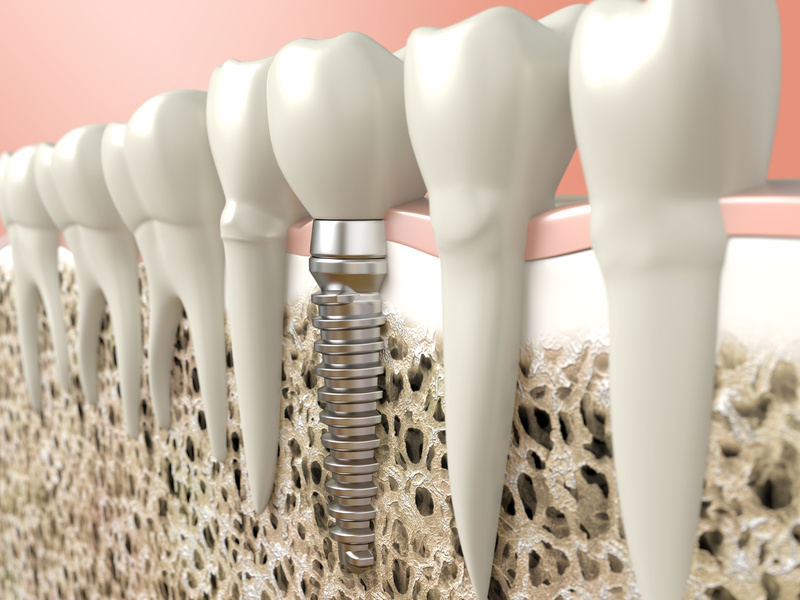
A dental implant is an artificial tooth root. It looks and functions exactly like a real tooth. The implant is placed into the jawbone where it bonds with your natural bone. The root is capped with a custom-made crown to match your natural teeth and fit your mouth.

Dental implants have been used successfully for more than 30 years. Over 3 million people worldwide have a dental implant. They’re the strongest replacement tooth option available. These implants are even more natural-looking and functioning than dentures.

If you’re missing a tooth or several teeth, consider asking your dentist about dental implants and whether you’d be a good candidate for the procedure.

What does the procedure look like?

The dental implant procedure isn’t a one-step process. The entire process of getting a dental implant takes several months. If you’ve decided to get a dental implant, the process will look something like this:

  1. Your consultation. Before getting a dental implant, your dentist needs to make sure that you’re a good candidate. Your gums need to be healthy and your jaw needs to be strong enough to hold the implant. If you’re a good candidate, your procedure will be scheduled.
  2. The implant is placed. During the first procedure, you’ll be given local or general anesthesia either at the dentist’s office or the hospital depending on the number of implants you’re receiving. The implant’s root is placed into the jaw during this first procedure. As you heal, the root will be covered with gum tissue. The new gum tissue keeps the implant secure in your jaw just like a real tooth.
  3. The connector is attached. Once the implant has healed, a connector (also known as an abutment) is placed onto the implant. This gives the crown something to attach to.
  4. The crown is attached. Your dentist attaches a customized crown to the connector. Once the entire implant has successfully healed, your implant will look and function like a real tooth.

While oral surgery can be scary, especially when it involves an implant, dental implant surgery is one of the most predictable and safe procedures in modern dentistry.

What are the benefits of dental implants?

Anyone who has a missing tooth can benefit from an implant. While adults commonly opt for implants over dentures, teenagers between the ages of 16 and 18 can also choose to have a missing tooth replaced with an implant.

Implants are typically chosen because of their many benefits including:

  • Giving you confidence. Teeth implants are secure, which means they don’t slip or click when you eat, laugh, or talk. Your speech will sound more natural and you can enjoy spending time with those you love without worrying about an embarrassing moment. Teeth implants give you greater peace of mind to be active and smile.
  • Keeping your other teeth healthy. Leaving a space in your teeth can cause health issues such as jaw deterioration and bite misalignment. However, certain treatments for missing teeth such as a dental bridge can put more stress on your remaining teeth. An implant helps to prevent bone loss and alignment issues without damaging your other teeth.
  • Staying strong. Your teeth implants are built to last. While dentures and dental bridges need to be replaced approximately every five to 10 years depending on their wear and tear, dental implants can last for decades.

Are you looking for some of the top dentists? We has the expertise you’re looking for when it comes to dental improvements. To learn more about how dental implants work or to schedule an appointment for a dental checkup, contact your Durango, CO Dentists.

Design a site like this with WordPress.com
Get started