Why You Shouldn’t Be Scared of Getting a Root Canal ?

Why You Shouldn’t Be Scared of Getting a Root Canal

If a dentist says that you need root canal treatment, you might panic because of all the rumors you have heard about the procedure. There is a mistaken notion about dental procedures, especially when it comes to root canals. Most people think this procedure is painful and scary.

However, this is not true. If you are scheduled for a dental procedure, an experienced dentist will keep you comfortable as much as possible. There are technological advancements and new techniques to ensure you have a safe, painless and successful procedure.

Here is why you should not be worried about the idea of getting a root canal.

Reasons to look forward to root canal therapy

Getting a root canal is not the most exciting thing. You will likely miss work and pay a fee, but that is the worst of it. The procedure is very beneficial and does not come with many downsides.  Prepare yourself for treatment by reading over the benefits of getting a root canal.

It will save your tooth

You might be worried if your tooth is severely decayed or painful to the touch. The thought of losing your tooth might even cross your mind. Since your tooth has been an important part of your mouth, losing it can be awkward and unpleasant. Before visiting the dentist, you may be wondering if there are alternatives to tooth removal.

If your tooth has suffered severe damage due to decay or injuries, the dentist will usually give you two options: Tooth extraction or a root canal therapy.

Tooth extraction used to be the only option. Luckily, undergoing a root canal can save your tooth and does not take much time. You may need a crown to keep the tooth protected, but at least you will not have a gap in your smile.

The procedure is not as painful as people think

The process entails removing the infected part of your tooth. The dentist will make an opening to access the pulp chamber. The pulp and the root are then removed, and the void is sealed.

Before starting the procedure, the dentist will apply local anesthesia to numb your tooth and the surrounding gum. This is to ensure you do not feel any pain or discomfort throughout the procedure. Once the procedure is complete, you will no longer feel the tooth pain since the infection has been cleared. You may have some soreness, but an over-the-counter painkiller can help with that.

It will keep you healthy

An infection in the tooth can spread to other parts of the mouth. Even worse, the bacteria can enter the gums and bloodstream. If this happens, your blood will be septic. You will feel incredibly sick as your body fights this infection. Without treatment, sepsis can become fatal. 

Do not fear the dentist

A root canal should not be scary if you get treatment from the best dentist in Durango, CO. The best dentist will keep you comfortable, guide you through the entire procedure and discuss your options.

Seeing a Cosmetic Dentist To Renew Your Smile

Seeing a Cosmetic Dentist To Renew Your Smile

A cosmetic dentist helps patients fix minor imperfections with their smile. They do this by offering a variety of treatment procedures specifically designed to improve the appearance of the patient.

By understanding the options available and how the process works, individuals can make a more informed decision about cosmetic treatment.

An overview of treatment with a cosmetic dentist

There are certain times when visiting a cosmetic dentist is incredibly beneficial. It is helpful to understand the benefits and potential treatment options.

The following is an overview of what exactly a cosmetic dentist is, what treatment options might be ideal and how the process works.

What is a cosmetic dentist?

A cosmetic dentist is a dentist and completes the same level of education and training as a general and family dentist. The difference, however, is a cosmetic dentist chooses to focus on the appearance of a patient’s smile. They are less concerned about addressing issues for oral health reasons alone.

Of course, many cosmetic dentists also offer more general procedures as well. However, the intention behind the procedure is likely slightly different for both the dentist and the patient.

What treatment options are available?

Cosmetic dentists offer personalized treatment and tailor the exact treatment plan to what the patient needs most and the preference of the patient. Most offer a wide variety of treatment options to choose from. Some of the more frequently requested services include:

  • Professional whitening
  • Teeth straightening
  • Dental veneers 
  • Tooth bonding
  • Teeth replacement

Cosmetic dentists can combine treatment procedures to provide a complete service for patients who have more than one cosmetic imperfection.

How can a cosmetic dentist help?

Cosmetic dentists work to address cosmetic concerns of patients in an effective and efficient manner. The first step they are likely to take is to conduct an oral examination of the patient. This will help them learn about the patient’s medical history and discuss treatment goals. After doing so, they can work out a short-term and long-term treatment plan for the patient.

When to visit a cosmetic dentist

Visiting a the dentists in Durango, CO is a good idea for anyone who is not happy with the way they look while smiling. The reality is the quality of a person’s smile plays a role in his or her level of confidence, attractiveness to others and even the way he or she is viewed in a professional setting.

A common misconception is that patients who seek treatment from a cosmetic dentist only do so to become more attractive. For many, it is more about being able to perform better in job interviews, improve oral health and simply feel better about themselves each day.

The 5 Most Commonly Asked Questions About Dental Veneers

Dental Bonding vs. Veneers: What's Right for You? -
The 5 Most Commonly Asked Questions About Dental Veneers

Think that dental veneers may be the right choice for you? If one or more of your teeth are chipped, broken, stained, or oddly shaped, know that these are just a few of the problems that veneers can fix.

There have been many improvements in the dental niche in recent years, all of which give patients access to more ways to make cosmetic improvements that allow them to have a pleasant-looking smile.

What exactly are veneers?

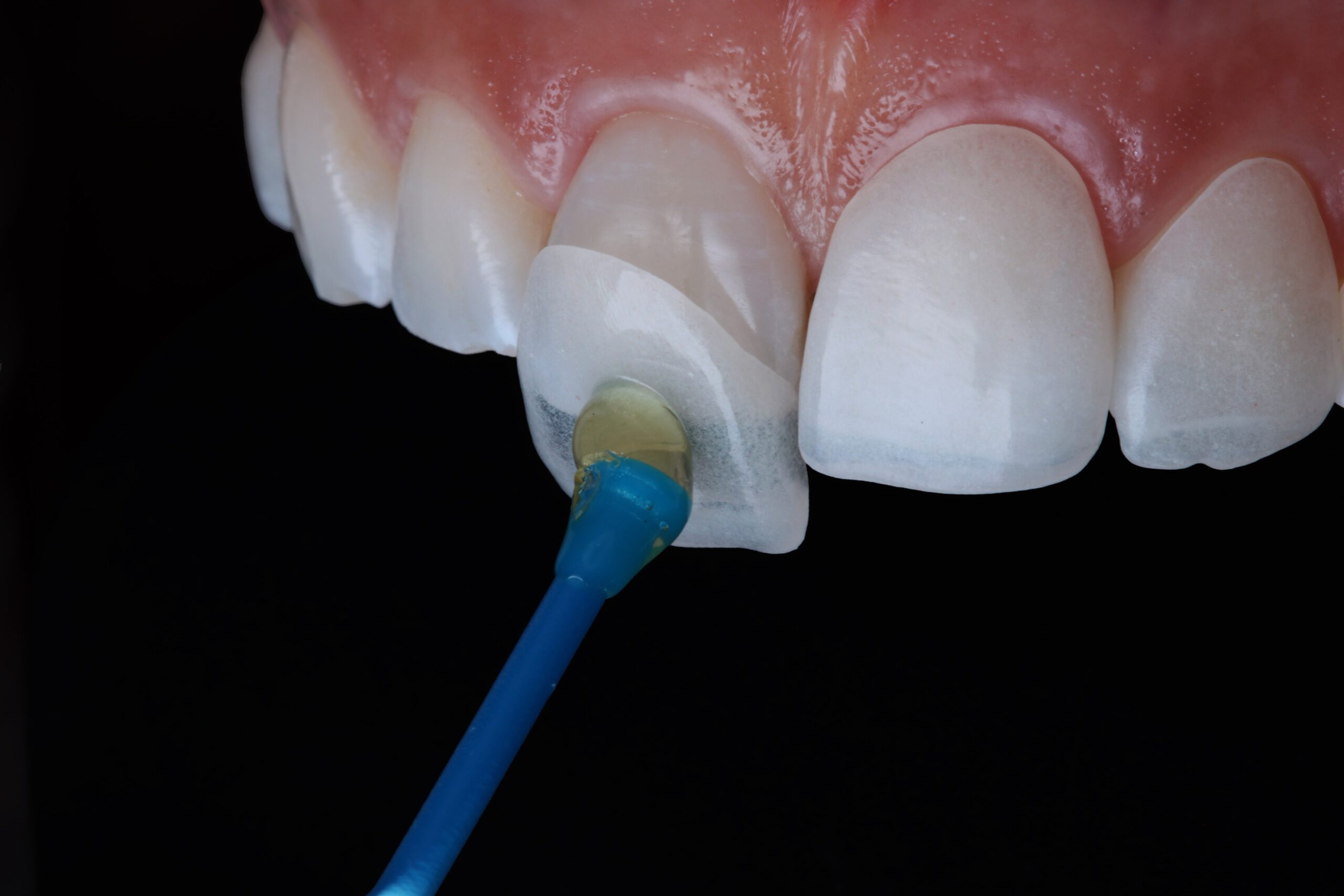
Dental veneers are also known as porcelain veneers and dental porcelain laminates. They consist of thin pieces of porcelain that are custom made for every patient and are what dentists use to cover up different types of tooth imperfections. They are bonded to a tooth using a special bonding material, and because they are custom made, they are natural-looking.

The five most commonly asked questions about dental veneers

The list below includes common questions people have about veneers.

Are dental veneers permanent?

No, dental veneers are not a permanent cosmetic option for addressing problems in teeth. While veneers will not last forever, with proper care and regular dental appointments, they can easily last between 10 and 20 years. This is a long amount of time for a cosmetic dental option to last, which is why veneers are so popular.

Can dental veneers stain?

Yes, it is possible for dental veneers to get stained. The types of stains that can happen to veneers are called extrinsic stains, which means that any stains only occur to the outside of the veneer. Two common reasons that extrinsic stains will occur are consuming certain foods and drinks and smoking. Patients with veneers can go to a dentist and have them cleaned, allowing them to look brand new once again.

Are dental veneers reversible?

It depends. The process of getting a veneer placed on a dental patient’s tooth often requires the removal of enamel so the veneer will stay securely in place. When a dental patient has to have any enamel removed from their teeth in order to get veneers, it means the process is not reversible.

For patients who do not require any enamel to be removed from their teeth, then it is possible for the veneer placement process to be reversed.

Are dental veneers easy to care for?

Yes, taking care of dental veneers is not a difficult process at all. The porcelain shells are strong, so all anyone has to do is take proper care of their teeth, and their veneers will be properly cared for.

Good oral care includes brushing the teeth at least twice a day with a soft-bristled toothbrush and a fluoridated toothpaste and flossing the teeth at least once a day to remove any food particles that may be stuck in between the teeth.

Can anyone get dental veneers?

No, not just anyone can get veneers placed on their teeth. In order for a dental patient to be approved to get veneers, their teeth must be strong and healthy, and they must have an adequate amount of tooth enamel. For patients who have crooked teeth or who grind or clench their teeth, dental veneers may not be the right choice for them.

Are veneers the right choice for you?

Ready to use dental veneers to cover up any imperfections in your teeth that prevent you from showing off your smile? If you are, they invite you to contact me right now so they can get you scheduled for your first appointment.

If you are still not sure whether veneers are the right choice for you, then you can make an appointment with the best dentists in Durango, CO for more information. Ready to get the process started so you can have a great-looking smile?

Getting Inlays and Onlays in Cosmetic Dentistry

Getting Inlays and Onlays in Cosmetic Dentistry

While cosmetic dentistry does aim to improve appearance, it also focuses on the function of the teeth. Cosmetic dentists often perform certain procedures that help enhance the teeth, while also ensuring that the procedure will benefit the tooth’s health and functionality.

Inlays and onlays are two common types of fillings that work to improve appearance and function. Cosmetic dentists use these fillings to help restore a patient’s tooth, while also ensuring that the tooth looks clean and healthy. 

How cosmetic dentistry uses inlays and onlays

Both inlays and onlays are considered indirect fillings. This means that they are created outside of the mouth, as opposed to a traditional dental filling that is put directly into the tooth during the procedure. Typically, a dental lab will fabricate inlays and onlays in a dental lab. Then, the cosmetic dentist will bond it to the tooth that is in bad shape. 

Cosmetic dentists often recommend inlays and onlays for patients that have moderate damage. Damages include minor staining, small chips or cavities. Additionally, it is good to know that inlays and onlays are used primarily for molars.

Molars often require a traditional filling or a dental crown when they are in bad shape. Cosmetic dentistry tends to use inlays and onlays because they are a nice in-between of the two. 

When an inlay or onlay is used in cosmetic dentistry, it is likely that there will be two to three appointments required. The first appointment allows the dentist to remove any decayed areas within the cusps or directly on the cusps. Then, impressions can be made so that the dental lab can custom make the indirect filling.

The patient will return to their cosmetic dentist for placement of the inlay or onlay. After a few weeks of recovery, the cosmetic dentist may recommend a follow-up appointment to ensure that the tooth is adapting well to the filling. 

Inlays in cosmetic dentistry

Cosmetic dentists use inlays to help patients achieve better form and function of their back teeth. Inlays are used in cosmetic dentistry for treating problems within the small cusps of a molar. When there is a stain or infected area in between the cusps of a molar, the cosmetic dentist will recommend an inlay filling. 

Onlays in cosmetic dentistry

Onlays are the other type of indirect filling that the dentists in Durango, CO tend to recommend. They are used when the molar requires treatment on one or more of the cusps. Damage tends to occur on the cusps, more often than not.

This because the cusps are raised and they are responsible for chewing and grinding foods. Additionally, those that grind their teeth at night, will experience extra wear and tear on the cups since the top arch meets up with the bottom arch through the cusps.

Options for Fixing a Broken Tooth

Chipped Tooth Repair Cost | East Valley Dental Professionals
Options for Fixing a Broken Tooth

Wondering how to repair a broken tooth? Anytime someone experiences damage to one or more of their teeth, professional dental treatment done by best dentist in Durango, CO is often necessary. Saving a broken tooth is possible and is preferred over losing it.

How teeth can break

Understanding how someone can experience a broken tooth is necessary, as this information will help prevent it from reoccurring. Additionally, the cause of the break may help dictate the type of repair that is needed.

It is also important to understand that there are different types of tooth breaks, e.g., chips, cracks, fractures. Some of the more common reasons why a broken tooth may occur include eating hard foods, grinding, clenching, being in an automobile accident and experiencing a sports-related injury.

According to Healthline, teeth can be damaged in any number of ways, and the damage can be slight or extensive depending on the condition of the teeth and the type of injury.

Broken tooth repair options

The information below explains some of the more commonly used treatment options for fixing a tooth that has been broken. There are a few popular home remedies that can be used to address any discomfort or pain that often accompanies a broken tooth, which can be used until one is able to make it to their dental appointment for professional treatment. An example of a home remedy is using clove oil, which can be applied directly to the tooth.

Cosmetic contouring

Minor chips or breaks can often be treated using cosmetic contouring. This treatment procedure for fixing a broken tooth requires a dental professional to use special dental tools to smooth out any problem areas and then use a dental bonding material to fill in any gaps. This treatment focuses on restoring the cosmetics of the tooth and tends to take 30 minutes or less to complete the procedure.

Dental bonding

Dental bonding is a treatment option for fixing a minor to a moderate broken tooth. When a dental patient is in need of bonding treatment, the bonding material is matched to the color of their teeth, supporting their cosmetics.

The dental professional will then carefully apply the tooth-colored resin material to the tooth. The goal is to fix the broken tooth so that it is no longer weaker, as well as to make the tooth look cosmetically pleasing once again.

Dental veneers

For moderate to major broken teeth, dental veneers are often used for treatment. Veneers consist of very thin pieces of porcelain shells that can be used to fix, as well as cover up a number of tooth imperfections.

These shells are custom-made for every patient, which means patients can not only expect the veneers to fix their broken teeth, they can also expect the tooth to once again be cosmetically attractive.

When are Dental Crowns Recommended by Dentists?

Dental Crowns Orlando, FL - Windermere Dental Group
When are Dental Crowns Recommended by Dentists?

Dental crowns are used in general dentistry very frequently as they are quite versatile. They can solve a number of problems ranging from a simple chip to a severe break. When considering dental restorations, it is worth looking into dental crowns.

Outside of being versatile, they are offered in different materials, which can be helpful for individuals looking for variety and options. 

Uses for dental crowns

Outlined below are a few scenarios in which a general dentist in Durango, CO may recommend dental crowns.

Decay

The main reason a general dentist may recommend a dental crown is to restore a decayed tooth. Decay occurs when there is an infection in the tooth or nearby in the gums.

Long-term, if the infection does not get treated, the tooth can begin to decay, which can lead to a need for a dental crown. Decayed teeth can be restored with a number of dental crowns, ranging from metal ones to ceramic. 

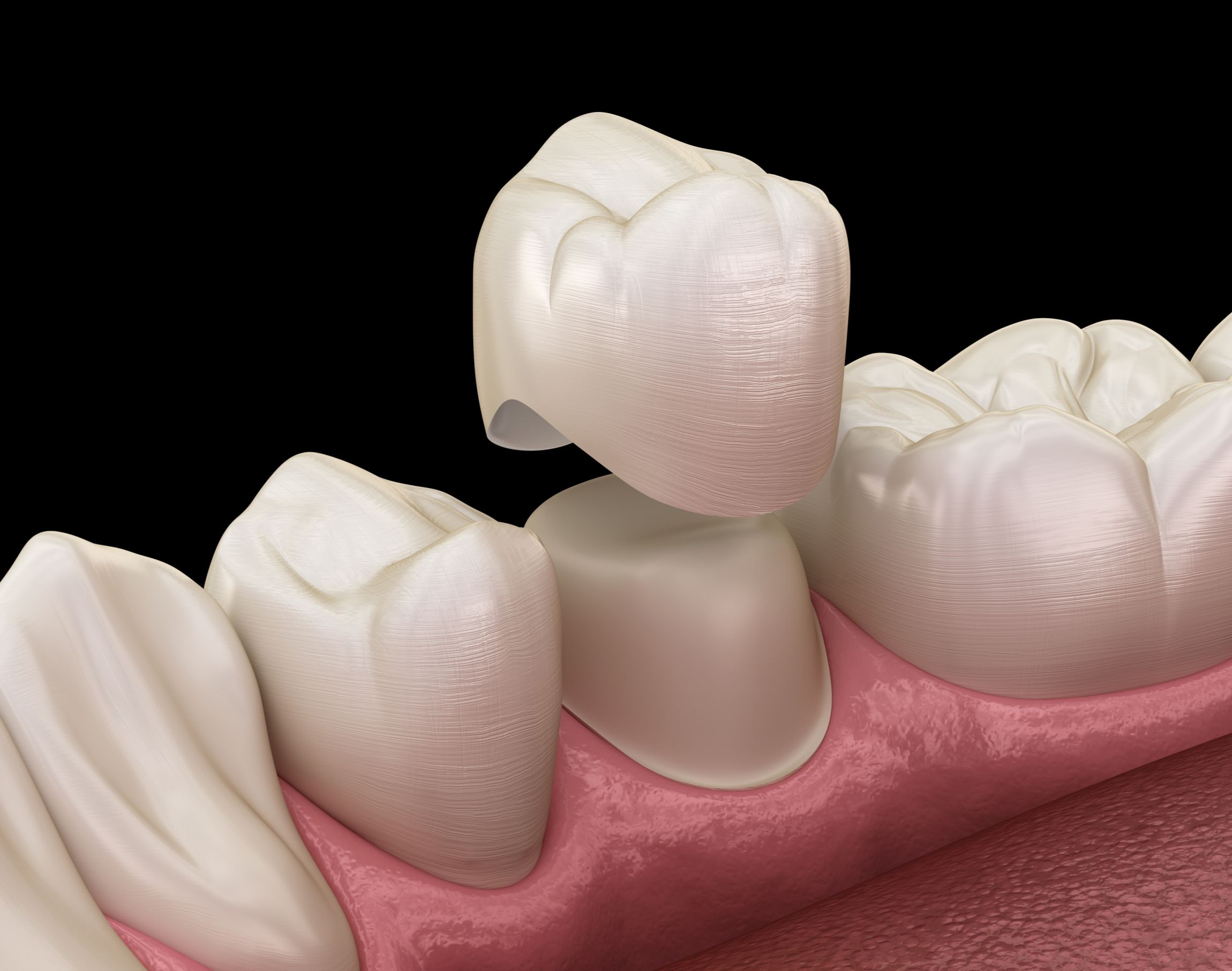
Dental crowns are also recommended and often required to finish a root canal. Root canals are performed in order to remove severe amounts of decay within a tooth. To protect the tooth after a root canal, a dental crown can cover the exposed roots and protect them from further damage.  

Chips and cracks

An injury can result in a chipped or cracked tooth, which can require a dental crown to fix. Cracks and chips are not necessarily always detrimental, however, they can ruin one’s aesthetic. Additionally, they put the soft tissues within the mouth at risk, which can result in a further injury. 

Dental crowns can completely cover chips and cracks so that the tooth is restored and renewed, thus improving aesthetics, reducing risk and ensuring good oral health. 

Other imperfections

There are other imperfections that may require a dental crown to fix, such as stains or tooth breaks. In some scenarios, stained teeth cannot be whitened, whether it be due to years of build-up or a sensitivity to the products.

Thankfully, a ceramic or porcelain dental crown can be used to cover the stains and renew the tooth so that it appears lighter and whiter. Additionally, a tooth break can be fixed with a dental crown as it can completely cap and cover it, thus stopping the break and preventing it from getting worse. 

Tooth replacement

Dental crowns are often used in conjunction with other prosthetics to replace missing teeth. Dental bridges and implants can be used to replace the structure of a tooth, and then, dental crowns can be attached to the bridge or implant to complete the replacement.

Dental crowns that are used for tooth replacement are often ceramic or porcelain because they are both white in color, which ensures a natural-looking replacement. 

Can a Root Canal Save a Tooth?

How Long Does A Root Canal Take in 2020? - Smile Angels of Beverly Hills
Can a Root Canal Save a Tooth?

If the root canal of a tooth is infected, you need to visit a dentist as soon as possible. Endodontic treatment, commonly called root canal therapy, entails repairing a damaged and infected inner layer of the tooth. By performing the treatment, a dentist can save the infected root canals from abscess or extraction.

What are root canals?

Root canals are hollow chambers in the tooth’s root containing the dental pulp and nerves. The dental pulp is made up of living material and nerve endings, which transmit information to the brain and cause pain or discomfort when inflamed or irritated. The pulp is the innermost layer of the teeth and can become damaged due to severe tooth decay or a compromised tooth structure.

If the tooth is healthy, the root canals should not be exposed to bacteria or plaque. However, if the tooth is cracked, badly damaged, chipped or the gum is infected, the root canal will be prone to infection. Root Canal can save a tooth with severe decay or dead pulp.

Symptoms of root canal infection

The most common sign that patients experience with exposed or infected root canals is tooth pain. Discomfort can occur as a persistent nagging ache or sharp pain when biting on food or taking a hot or cold drink. If the infected tooth is not treated promptly, the pain may stop eventually.

Some patients may think erroneously that it means recovery, but the fact is that the nerve endings died and the infection is still there. The infection may spread and cause an abscess around the base of the tooth roots.

Why root canal therapy is necessary

Root canal therapy is necessary to help save the tooth. If left untreated, the complications that result from an infected root canal will leave no choice but to extract the tooth to stop the infection from spreading to other nearby oral structures.

Tooth loss due to injury or disease has adverse effects on the oral health and general wellbeing of the patient, so it is advisable to save the natural tooth if possible. Tooth replacement options are not exactly inexpensive, as well.

After the dentist examines the diseased or damaged tooth, they will suggest the most suitable treatment option after a professional evaluation. The procedure is done to clean the infection thoroughly from the pulp chamber of the tooth to stop the spread of infection. The tooth chamber will be filled, and a crown will be used to protect the tooth from further damage.

Compared to tooth extraction, root canal therapy is less invasive. The best dentist in Durango, CO will ensure the patient’s comfort throughout the procedure by using an appropriate anesthetic.

Final note

Before opting to remove an infected or diseased tooth, root canal therapy is an option to consider.

FAQs – Dental Veneers Procedure

How Have Dental Veneers Changed Over Time? - Pathway Dentists
FAQs – Dental Veneers Procedure

Dental Veneers are a popular treatment option offered in cosmetic dentistry. Individuals with damaged or broken teeth can benefit from having dental veneers placed. They work to restore teeth that are in bad shape and improve the appearance of stained, cracked or chipped teeth. 

With any cosmetic dentistry procedure, comes questions. In the case of dental veneers, there are a few important things to know and get familiar with prior to undergoing the placement procedure. 

Questions and answers about dental veneers

Outlined below are some of the most frequently asked questions about dental veneers. The answers that follow come directly from dentists who practice cosmetic dentistry. 

1. What exactly are dental veneers?

Dental veneers are thin plastic coverings that go directly over teeth. They are typically made of porcelain, which is a very strong material often used in cosmetic dentistry. It can be color-matched to the individual’s surrounding teeth, which makes for a discrete treatment option.

2. Do dental veneers hurt?

No! There may be some slight sensitivity or discomfort immediately after the dental veneers have been placed. However, the procedure relies on an anesthetic, which eliminates the chance for any pain. Sensitivity usually wears off within a day or two. 

3. What can dental veneers be used for?

Dental veneers can be used for a number of things, including cosmetic and restorative purposes. Outlined below are some of the most common things that a dental veneer can treat.

  • Stained teeth
  • Cracks in front teeth
  • Chips in front teeth
  • Teeth that are too short
  • Teeth that are not completely aligned with surrounding teeth

4. How long does the procedure take?

A dental veneer procedure takes up to two hours, depending on how many teeth are being worked on. However, it is good to know that the process may extend past one appointment. Dental veneers are custom-created for each patient, which means there is a waiting period in which a dental lab has to make the restorations. 

Typically, the individual visits their cosmetic or general dentist for impressions to be taken during the first appointment. After a couple of days, the dental lab will send the dental veneers back to the dentist so that placement can be done. Then, the individual will return to the dentist to have the dental veneers attached. 

5. Is there any recovery time?

Dental veneers do not require any recovery time. The dentists in Durango, CO will likely recommend that the individual avoid chewy or hard foods for a couple of days after the procedure. However, outside of routine oral hygiene, the individual should be able to function normally.  

When Is a Tooth Extraction Necessary?

How to Prepare for a Tooth Extraction
When Is a Tooth Extraction Necessary?

While dentists will often do everything possible to save a tooth no matter the age of the patient, there are some situations where tooth extraction is necessary. When it comes to removing teeth, there are two different types of extractions a dentist or oral surgeon can use depending on the reason for removal: Simple extraction and surgical extraction.

A simple extraction can be used when the tooth is already fully emerged past the gum line and can be easily removed using forceps.

A surgical extraction involves cutting into the gums to retrieve a tooth, usually because it is impacted. Here are some common reasons a patient might need to have either a simple or surgical extraction performed.

Reasons for a simple tooth extraction  

The best dentist in Durango, CO might suggest pulling a patient’s tooth because of infection or overcrowding in the mouth. Continue reading to learn more about each of these reasons for a tooth extraction.

Tooth decay or gum disease

Fillings or root canal treatment can often treat minor cases of tooth decay, but severe deterioration can warrant the need for extraction. This situation often occurs if the patient has not had a dental exam in a while and the decay has gone untreated for a long period of time. Eventually, the decay can extend to the pulp of the tooth leading to an infection.

If the infection is too severe to be treated by root canal therapy, the extraction of the tooth is necessary to keep the infection from spreading. Gum disease is another type of infection that causes the degeneration of the bones and tissues surrounding a tooth. If not addressed early on, these structures can deteriorate to the point that the tooth either falls out or needs to be pulled.

Overcrowding

If teeth are severely misaligned or overcrowded, it might be necessary to pull teeth to open up space in the mouth or to make an opening for an impacted tooth. Most often, the removal of the tooth or teeth is combined with orthodontic treatment. Braces are used after the tooth is removed to further expand the jawbone and balance the bite.

Impacted teeth and surgical extraction

An impacted tooth is one that has been blocked from emerging from the gums and is often discovered during a dental X-ray. Some impacted teeth will eventually break through the gums without treatment; also, removing baby teeth or orthodontic treatment can sometimes allow the teeth to come in properly.

Other times, tooth extraction is necessary if the teeth are unable to erupt through the gums on their own. Often, surgical extraction is used on wisdom teeth or maxillary canines that cannot be guided to the correct position.

Conclusion

Typically, a dentist will do everything possible to preserve a tooth if possible before choosing to extract it. However, if the patient is suffering due to an infection of the tooth or gums it might be necessary to quickly remove the tooth to avoid even more harm from occurring.

If teeth are overcrowded or impacted, a treatment plan can be made to determine if a tooth extraction is the best line of action.

A Family Dentist Discusses the Importance of Oral Hygiene Care

Family Dentist De Pere | Child, Teen & Adult Dental Care
A Family Dentist Discusses the Importance of Oral Hygiene Care

Family dentists are a great source of information when it comes to how to properly take care of oral health. They are trained in general dentistry, which makes them experts at helping patients of all ages practice good oral hygiene. 

Why oral hygiene care is so important

Choosing to have a family dentist oversee one’s oral health is something many families are deciding to do. Good oral hygiene care is essential if someone wants to have a healthy mouth. Additional reasons why hygiene care is important is because it helps prevent tooth insensitivities, bad breath and tooth loss. Good oral hygiene care also supports one’s overall health. 

How to create an everyday oral hygiene routine

The below list explains what dental patients need to do in order to create an oral hygiene routine that supports their good oral health on an everyday basis.

Brush teeth two to three time per day

Brushing teeth should be done after breakfast and after dinner, however, some people also brush their teeth after lunch. The goal of brushing is to remove any food particles still existing in the mouth, as well as remove plaque from the teeth.

Using a soft-bristled toothbrush helps to prevent any tooth or gum damage and using a non-abrasive toothpaste also helps to protect the teeth. Holding the toothbrush at a 45° angle and using small gentle circular motions helps to ensure that every single tooth is properly brushed.

Floss teeth one to two times per day

Using a waxed floss is recommended by the dentists in Durango, CO, as this type of floss is easier to use when removing food particles from in between the teeth. It is important to be gentle when flossing, as it is possible to damage the gums when doing so.

To start, it is necessary to pull out 18 inches of floss, hold the floss firmly between the thumbs and index fingers and then slowly slide the floss in between every tooth. The next step is to slowly slide the floss against each side of the tooth in order to remove food particles and plaque.

Use a quality mouthwash

There are many different types of mouthwashes available, which is why it is important to carefully choose the best one. For example, some patients will benefit from using an anti-microbial mouthwash while others may benefit more from using a mouthwash that helps control plaque.

It is important to use mouthwash exactly as directed in order to experience the best outcome. It is also important for people to understand that they should not rinse their mouth with water right after using mouthwash.

Design a site like this with WordPress.com
Get started