Use Appropriate Hygiene Products for Maximum Smile Protection

Do You Know What's in Your Oral Hygiene Products? – Oral and Maxillofacial  Surgery In San Diego By McGann Facial Design
Use Appropriate Hygiene Products for Maximum Smile Protection

After years of research, I am confident in saying that brushing and flossing daily are essential for maintaining a healthy mouth. A mere five minutes a day performing these tasks will significantly lower your risk of dental disease.

I am also sure about the essentials you’ll need to perform these tasks: a soft-bristled toothbrush using fluoride toothpaste, and a roll (or picks) of dental floss. The only deviation might be a water flosser appliance instead of flossing thread.

Unfortunately, some folks deviate even more from the norm for both of these tasks. One of the strangest is a social media trend substituting regular toothpaste with substances containing activated charcoal.

The proponents of brushing with charcoal claim it will help whiten teeth and kill harmful microorganisms. People brushing with a black, tarry substance also seem to make for good “gross-out” videos.

There’s no substantial evidence to support these claims. Perhaps proponents of charcoal’s whitening ability are assuming it can remove stains based on its natural abrasiveness.

It could, however, remove more than that: Used over time, charcoal could wear down the protective enamel coating on your teeth. If that happens, your teeth will be more yellow and at much greater risk for tooth decay.

When it comes to flossing (or more precisely, removing food material from between teeth), people can be highly inventive, substituting what might be at hand for dental floss.

In a recent survey, a thousand adults were asked if they had ever used household items to clean between their teeth and what kind. Eighty percent said they had, using among other things twigs, nails (the finger or toe variety) and screwdrivers.

Such items aren’t meant for dental use and can harm tooth surfaces and gum tissues. Those around you, especially at the dinner table, might also find their use off-putting. Instead, use items approved by the American Dental Association like floss, floss picks or toothpicks. Some of these items are small enough to carry with you for the occasional social “emergency.”

Brushing and flossing can absolutely make a difference keeping your teeth and gums healthy. But the real benefit comes when you perform these tasks correctly—and use the right products for the job. Also its important to visit the best dentist in Durango, CO from time to time.

Keep an Eye on Your Oral Health during Cancer Treatment

DentalFeature: Oral Health Care During Cancer Treatment - Caribbean News
Keep an Eye on Your Oral Health during Cancer Treatment

A third of people treated for cancer develop adverse side effects within their mouth. But while these effects can be devastating to teeth and gums, there are ways to minimize the damage.

Treatments like chemotherapy and radiation work by destroying cancer cells. Unfortunately, they may also destroy normal cells. The accumulation of this “collateral damage” ultimately affects uninvolved areas and organ systems of the body. Chemotherapy, for example, can interrupt bone marrow blood cell formation and decrease the body’s ability to fight infection.

These ripple effects can eventually reach the mouth. It’s not uncommon for cancer patients to develop mouth sores or see an increase in tooth decay or periodontal (gum) disease.

The treatments may also inhibit saliva flow: because saliva neutralizes acid and provides other benefits that lower disease risk, dental disease is more likely to develop when the salivary flow is reduced.

The first step to minimizing these effects is to improve oral health before cancer treatment begins. An unhealthy mouth vastly increases the chances for problems during treatment. Cooperating with your cancer physicians, we should attempt to treat any diseases present as soon as possible.

During cancer treatment we should also monitor your oral health and intervene when appropriate. If at all possible, you should continue regular dental visits for cleaning and checkups, and more so if conditions warrant.

We can also protect your teeth and gums with protective measures like antibacterial mouth rinses, saliva stimulation or high-potency fluoride applications for your enamel.

What’s most important, though, is what you can do for yourself to care for your mouth during the treatment period. Be sure to brush daily with a soft-bristle brush and fluoride toothpaste.

You can use a weak solution of one-quarter teaspoon each of salt and baking soda to a quart of warm water to rinse your mouth and soothe any sores. And be sure to drink plenty of water to reduce dry mouth.

While you’re waging your battle against cancer, stay vigilant about your teeth and gums. Taking care of them will ensure that after you’ve won your war against this malignant foe your mouth will be healthy too.

If you would like more information on taking care of your teeth and gums during cancer treatment, please schedule an appointment with the trusted dentists in Durango, CO

Smoking Could Increase the Risk of an Implant Failure

Having Dental Implant Problems Years Later After Surgery
Smoking Could Increase the Risk of an Implant Failure

Although they can be expensive upfront, dental implants often prove to be a wise investment in the long-term. With a success rate that outperforms other teeth replacement restorations, dental implants could be the answer to a more attractive smile that could last for decades.

But while their success rate is high (95% still functioning after ten years), they can and do occasionally fail. Of those that do, two-thirds happen in patients who smoke.

This unfortunate situation stems from smoking’s overall effect on dental health. The nicotine in tobacco constricts oral blood vessels, inhibiting the flow of nutrients and antibodies to the teeth and gums.

Inhaled smoke can scald the inside skin of the mouth, thickening its surface layers and damaging salivary glands leading to dry mouth.

These and other effects increase the risk for tooth decay or gum disease, which in turn makes it more likely that a smoker will lose teeth than a non-smoker and require a restoration like dental implants. And blood flow restriction caused by nicotine in turn can complicate the implant process.

Long-term implant durability depends on bone growth around the imbedded implant in the ensuing weeks after implant surgery. Because of their affinity with the titanium used in implants, bone cells readily grow and adhere to the implant. This integration process anchors the implant securely in place.

But because of restricted blood flow, the healing process involved in bone integration can be impaired in smokers. Less integration may result in less stability for the implant and its long-term durability.

To increase your chances of a successful implant installation, you should consider quitting smoking and other tobacco products altogether before the best dentist in Durango, CO performs your implant surgery.

If that’s too difficult, then cease from smoking for at least one week before surgery and two weeks after to better your odds of implant success.

And be as meticulous as possible with daily brushing and flossing, as well as regular dental visits, to reduce your risk of disease.

There are many good reasons to quit smoking. If nothing else, do it to improve your dental health.

3 Ways to Protect Your Dental Work From an Early Demise

Feeling Guilty About Not Flossing? Maybe There's No Need - The New York  Times
3 Ways to Protect Your Dental Work From an Early Demise

There have been vast improvements over the years in various methods to restore diseased, damaged or missing teeth. A lot of this is due to better restorative materials that are stronger and more life-like.

But given the mouth’s hostile environment and the forces generated from chewing, even the most durable restorations could fail. You can, however, improve their durability through proper care and good protective practices.

Here are 3 ways to preserve your dental work and keep it functioning for years or even decades to come.

Daily oral hygiene. Although the bacteria in dental plaque doesn’t affect non-living dental materials, it can infect and weaken living tissues around fillings, crowns or implants.

Because these tissues often support restorations, an infection could cripple your dental work’s survivability. You can prevent this by practicing daily brushing and flossing, and getting regular dental cleanings, to remove plaque and decrease your risk of dental disease.

Dietary choices. You can further prevent dental disease by restricting your consumption of sugar and eating foods rich in calcium and other nutrients. But there’s one other thing to keep in mind about what you eat: Some foods can stain veneers and other restorations, as well as natural tooth enamel.

If staining occurs at different rates, your dental work could stand out from your natural teeth and look out of place. You can help avoid this by limiting items in your diet known to stain (like wine or coffee) and practicing good oral hygiene.

Poor habits. Many of us have nervous habits like nail-biting or ice-chewing, or an unconscious habit of grinding teeth. Habits like these can damage restorations like composite bonding or veneers.

To prevent the chances of this happening, take steps to stop habits and practices that involve biting down on hard objects (including foods like fruits with hard skins). You should also talk to the dentists in Durango, CO about solutions to reduce teeth grinding, especially if it’s occurring while you sleep.

Above all, keep up your dental visits to regularly monitor the condition of your dental work and obtain repairs or enhancements as needed. By taking care of these valuable restorations, you can help them continue to function and serve your needs for a long time to come.

Floss First or Brush First? You Be the Judge

Ask Well: Floss or Brush First? - The New York Times
Floss First or Brush First? You Be the Judge

Brushing and flossing are two of the best things you can do to fight dental disease and maintain healthy teeth and gums.

Or is it flossing and brushing? What I mean is, should you floss first or brush first?

There’s virtually no debate among dental professionals about whether or not to perform both hygiene tasks. While brushing removes disease-causing plaque from the broad surfaces of teeth, flossing gets to deposits of this disease-causing, bacterial film lodged between the teeth that brushing can’t reach.

You don’t want to neglect one task over the other if you want to fully minimize your risk of tooth decay or gum disease (and don’t forget semi-annual dental cleanings too).

But where there is some debate, good-natured, of course, among the best dentist in Durango, CO is over whether it’s better hygiene-wise to brush before flossing or vice-versa. For those on Team Brush, you should pick up your toothbrush first for the best results.

By brushing before you floss, you’ll remove most of the plaque that has accumulated since your last cleaning session. If you floss first, the flossing thread has to plow through a lot of the plaque that otherwise might be removed by brushing.

For many, this can lead to an unpleasant sticky mess. By removing most of the plaque first via brushing, you can focus your flossing on the small amount left between teeth.

Team Floss, on the other hand, believes giving flossing first crack at loosening the plaque between teeth will make it easier for the detergent in the toothpaste to remove it out of the way during brushing.

It may also better expose these in-between areas of teeth to the fluoride in your toothpaste while brushing. And because flossing is generally considered a bit more toilsome to do than brushing, tackling it first could increase the likelihood you’ll actually floss and not neglect it after brushing.

So, which task should you perform first? Actually, it’s up to you: Weighing both sides, it usually comes down to which way is the most comfortable for you and will give you the greatest impetus for flossing. Because no matter which “team” you’re on, the important thing is this: Don’t forget to floss.

Include These Important Nutrients on Your Dinner Plate for Stronger, Healthier Teeth

How to Eat Healthy When You're Busy | SELF
Include These Important Nutrients on Your Dinner Plate for Stronger, Healthier Teeth

“Personalize Your Plate” is the theme for this year’s National Nutrition Month in March, sponsored by the Academy of Nutrition and Dietetics.

It means there isn’t a single diet for all of us: We’re each unique with differing body types and tastes, and our diets need to be unique as well. Still, though, you’ll want to be sure to include basic nutrients that are generally good for all of us—including for our teeth.

As you “personalize” your daily diet, be sure it includes dental-friendly vitamins and minerals, you can also take help from the dentists in Durango, CO. Here are some of the more important ones that contribute to strong and healthy teeth, and the kinds of foods in which you’ll find them.

Vitamin D. This vitamin is a key element for growing and maintaining healthy teeth and bone, mainly by helping the body absorb calcium. You’ll find vitamin D in milk, eggs or fatty fish—and you’ll also gain a little strolling outdoors in the sunshine!

Vitamin E. As an antioxidant, vitamin E helps the body fight free radical molecules that contribute to cancer development, including oral cancer. You’ll find vitamin E naturally in seeds and nuts (and derivative cooking oils), wheat germ and whole grains.

Calcium. When included with vitamin D and phosphorus, calcium is an important “construction material” for building strong teeth and bones. You’ll find calcium in dairy products like milk and cheese as well as greens, legumes and tofu.

Phosphorus. Eighty-five percent of the body’s phosphorus, a companion mineral to calcium, is found in teeth and bones, where it helps to keep them strong and healthy. You’ll find this important mineral in meats, milk and eggs.

Magnesium. This mineral helps mineralize teeth and bones, giving them strength and protection against disease. You can get magnesium by eating nuts, legumes, whole grains, dark leafy greens, seafood and—if you limit the added sugar content—chocolate.

Fluoride. Most people are familiar with fluoride added to drinking water or toothpaste to strengthen tooth enamel against tooth decay, but the mineral also occurs naturally in some foods. You can obtain low amounts of fluoride in seafood and black or green tea.

One last thing! While we’re promoting foods that you should eat for healthier teeth, there’s also one you’ll want to cut back on: processed sugar. This carbohydrate is a major factor in oral bacterial growth that causes tooth decay and gum disease.

So, eating foods low in sugar and high in these key vitamins and minerals will help ensure your teeth stay healthy.

Flossing an Implant-Supported Bridge can Prevent a Damaging Gum Infection

Implant Supported Bridge | Rio Grande Oral Surgery in Albuquerque
Flossing an Implant-Supported Bridge can Prevent a Damaging Gum Infection

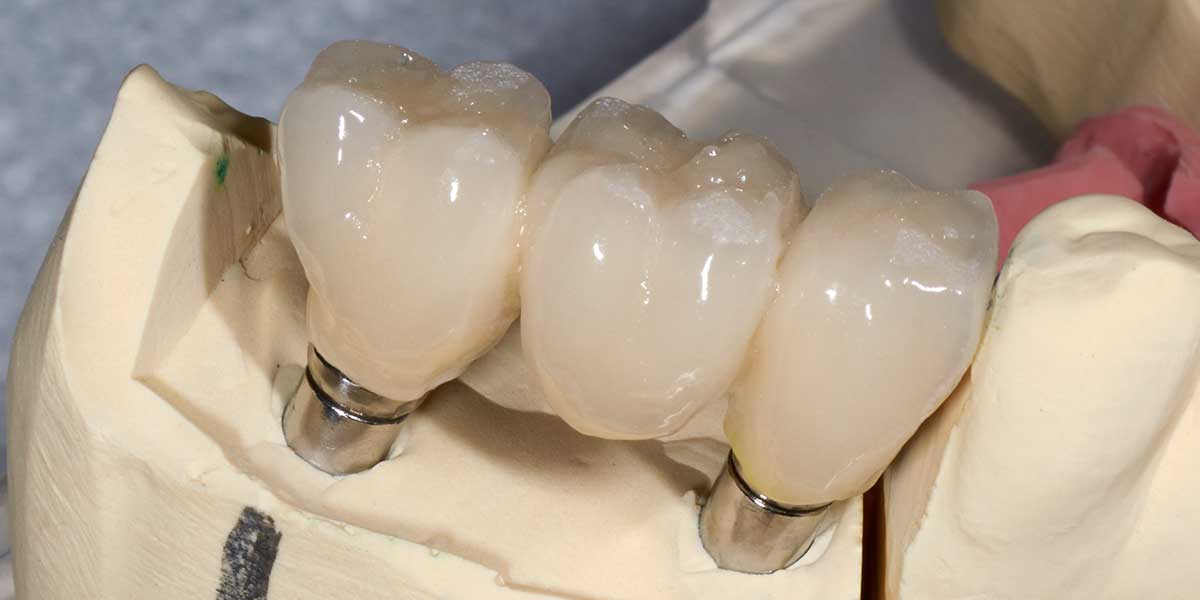
In recent years, dental implants have helped traditional bridgework take a giant leap forward. A few strategically placed implants can provide the highest support and stability we can currently achieve for this well-known dental restoration.

Implants derive this stability from the bone in which they’re imbedded. Once surgically installed, the bone around a metal implant begins to grow and adhere to its titanium surface. Over time, this creates a strong anchor that firmly holds the implant in place.

But the implants’ stability can be threatened if the gums around them become diseased. Gum disease, a bacterial infection caused mainly by dental plaque, can advance silently below the gum surface until it ultimately infects the bone. This can cause significant bone loss around an implant, which can weaken it to the point of failure.

To avoid this scenario, it’s important to prevent gum disease by flossing daily to remove accumulated dental plaque between the implant-supported bridge and the gums, particularly around the implants. This kind of flossing around bridgework is more difficult than flossing between teeth, but it can be done with the help of a device called a floss threader.

A floss threader is a small plastic hand tool with a loop on one end and a stiffened edge on the other (similar to a sewing needle). You begin by threading about 18″ of dental floss through the loop, and then work the other end of the threader between the bridge and gums to the other side.

With the floss threaded between the bridge and gums, you can now remove it from the threader, grasp each end, and floss around the sides of each implant you can reach.

You’ll then need to repeat the process by removing the floss, rethreading it in the threader and inserting it into the next section between implants, continuing to floss until you’ve accessed each side of each implant.

You can also use pre-packaged floss thread sections with a stiffened end to facilitate threading. But whichever product you use, it’s important to perform this task each day to prevent a gum infection that could rob you of your implant-supported bridge.

Consult Your Dentist for Help with Diagnosing and Treating Sleep Apnea

Important Reasons for Dental Consultations - Consumer & Health Benefits
Consult Your Dentist for Help with Diagnosing and Treating Sleep Apnea

Sleep — you’ll spend a third of your life in its blissful embrace. But it isn’t a luxury: you need it as much as nutrition and exercise. An occasional bad night’s sleep leaves you irritable and drowsy; a bad night’s sleep every night could endanger your health.

One of the most common causes for chronic poor sleep is obstructive sleep apnea. This occurs when the airway becomes blocked and you stop breathing temporarily. The blockage may be due to an oversized tongue, tonsils or uvula, an abnormal jaw or chin structure, or nasal polyps and congestion.

When your brain notices you’re not breathing, it rouses you just enough to relieve the blockage. These incidents can occur and end in seconds several times a night without you being aware of it.

This interrupts your normal sleep patterns, including the critical rapid eye movement (REM) of deep sleep that occurs at different times during the night.

The results of not getting enough REM sleep are quite unhealthy: besides irritability and reduced concentration, poor REM sleep is linked to depression, headaches, decreased sex drive, acid reflux, high blood pressure or the onset of diabetes.

Your night time experience — as well as your sleep partner’s — won’t be pleasant either as you may experience night time sweating and snoring.

Fortunately, sleep apnea can be treated. The first considered treatment is a custom-fitted night guard you wear while you sleep that holds the tongue back from the airway.

If your apnea is more severe, you may need to consider continuous positive airway pressure (CPAP) therapy, which uses a machine to pump pressurized air through a mask you wear while sleeping to force the airway open. You might also benefit from surgery to remove excess soft tissue obstructing the airway.

If you or your family has noticed any of these symptoms mentioned, make an appointment with the skilled dentists in Durango, CO to look for oral signs in the mouth that may indicate sleep apnea.

Your ‘Toothache’ Might Signal a Problem Other Than in Your Mouth

Odontoblasts: Scientists find why cold induces toothache, hypersensitivity  and how to stop it, Health News, ET HealthWorld
Your ‘Toothache’ Might Signal a Problem Other Than in Your Mouth

You expect a decayed tooth, a fracture or a gum infection to be the cause for that toothache causing you grief. Sometimes, though, the answer may be “none of the above”—there’s nothing wrong going on in your mouth to cause the pain.

You pain is real—but its source is elsewhere in the body, a situation known as referred pain. It’s important to find out the pain’s true source to determine what kind of treatment you’ll need to alleviate it.

Here are some of the likely candidates for a “toothache” that’s not a toothache.

Facial nerves. Tooth pain may be associated with trigeminal neuralgia, a misfiring disorder of the trigeminal nerves that course through either side of the face.

The nerve is divided into three branches, two of which are located in the upper face and one in the lower jaw. Because they’re interconnected, a problem with one of the branches in other parts of the face could be felt in the branch around the jaw.

Jaw jointsTemporomandibular Joint Disorders (TMD) can cause pain in the pair of joints that connect the lower jaw to the skull. The joints can become inflamed due to stress or trauma and the associated muscles begin spasming, causing severe pain.

Because of their proximity to the teeth, the pain from the joints can radiate into the dental area and mimic a toothache.

Ear or sinus infections. Both the ears and the maxillary sinus are subject to infections that can cause severe pain and pressure. With the close proximity of both the ears and the sinus to the upper jaw, it’s quite possible for pain originating in these structures to be felt within the mouth.

These are only a few of the possibilities that also include migraines, shingles, fibromyalgia and even vitamin deficiencies.

As such, the best dentist in Durango, CO or physician may need to do a little detective work to locate the true cause. But the effort to locate where your mouth pain is actually coming from will help ensure you get the right treatment to give you lasting relief.

How Diabetes and Oral Health are Linked

Poor Oral Health | Bad Oral Habits are Costly | Richardson TX

Patients who have diabetes are typically aware that the disease can affect other parts of the body, such as the nerves, kidneys, heart, and more. However, it can also cause problems with oral health. Those who have diabetes are more at risk for developing gum disease, which is an infection of the gums and bones that hold the teeth into place. 

What is Diabetes? 

When a patient has diabetes, it means that their blood glucose (blood sugar) is too high. Blood glucose is the main source of energy, and it comes from the food you eat. Insulin, a hormone made by the pancreas, helps glucose from food get into your cells and be used as energy.

However, sometimes the body doesn’t make enough insulin or doesn’t use it well. In this case, the glucose stays in your bloodstream and doesn’t reach your cells. Over time, having too much glucose in your blood can lead to health concerns. There are different types of diabetes, they are: 

  • Type 1: This is where the body does not make insulin. Your immune system will attack and destroy the cells in your pancreas that make insulin. This type of diabetes is most commonly diagnosed in children and young adults. People with type 1 will need to take insulin everyday. 
  • Type 2: With this type, your body does not make insulin or use it well. While you can develop type 2 diabetes at any age, it is most often found in middle-aged and older adults. This is the most common type of diabetes.
  • Gestational: This diabetes develops in some women when they become pregnant. Most of the time, this diabetes goes away once the baby is delivered. However, if you do have gestational diabetes, you are more likely to develop type 2 diabetes later in life. 

Diabetes and Oral Health 

Those who are diagnosed with diabetes are more likely to experience issues with their dental health. People with diabetes have been found to be more likely to develop periodontal disease.

Periodontal disease, also known as gum disease, is an infection of the gum and bone that keep the teeth in place. 

Why does this happen? If a person doesn’t have their diabetes in control, gum disease can develop. The National Institute of Dental and Craniofacial Research explains that having gum disease can make your blood sugar harder to control.

If you have diabetes, it is important to look over your mouth on a regular basis to see if there are any causes for concern. Sometimes, you may notice your gums are swollen and/or bleed when you brush and floss.

However, it is also common to experience mouth dryness, soreness, white patches, and a bad taste in the mouth. If you notice any of these signs, it’s important to make an appointment with Mountain Aire Dentistry and Dr. Robert Berry. 

Treating Gum Disease 

If you do develop gum disease with diabetes, it’s important to treat it to prevent tooth loss and further dental health issues. To treat gum disease, your dentist will do a deep cleaning of your mouth.

If your condition calls for it, you can also be prescribed a special mouthwash to help. However, in some instances, you may need to see a periodontist for gum surgery. 

How to Prevent Dental Health Problems 

The National Institute of Dental and Craniofacial Research continues to explain that good blood glucose control is the key in controlling and preventing dental health issues.

People who have poor blood sugar control will experience gum disease more often and more severely than those who have their condition well-controlled. If you do have this condition, they explain, it is important to: 

  • Control your blood glucose
  • Brush twice a day and floss regularly
  • Visit your dentist for regular checkups, being sure to let the dentist know that you have diabetes
  • Let the dentists in Durango, CO know of any issues you currently feel/see within your mouth
  • Quit smoking as smoking can make gum disease worse 
Design a site like this with WordPress.com
Get started